
Flowers
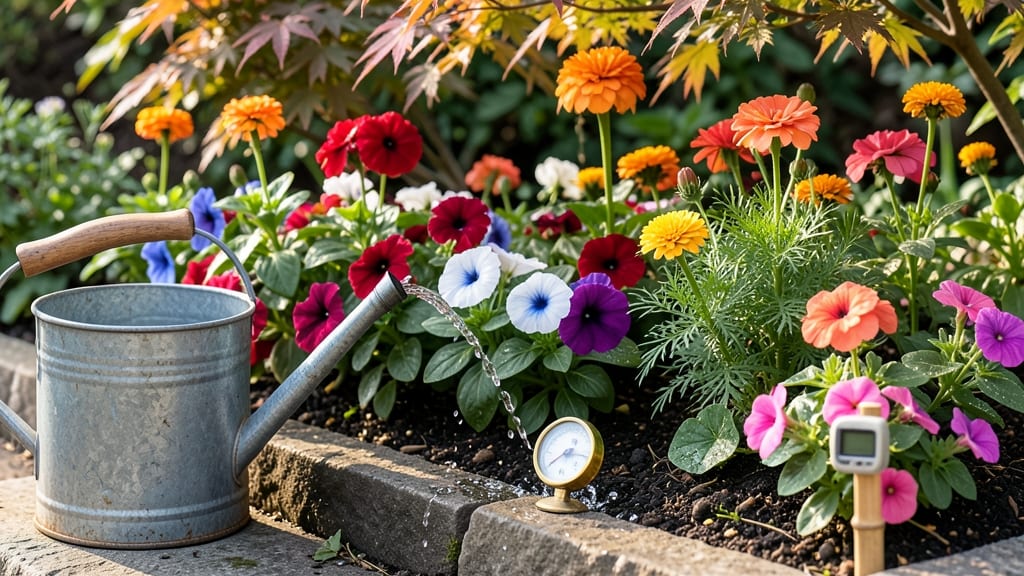
Watering flowers for 10 to 20 minutes at a time is the sweet spot—long enough to soak the roots but short enough to avoid drowning them.
Overwatering or underwatering your flowers can stunt growth, invite pests, or even kill your plants—yet most gardeners guess how long to water instead of following science-backed soil type guidelines.
Clay soil holds moisture like a sponge, so 15 minutes of deep watering every 2-3 days keeps roots happy, while sandy soil drains fast, needing only 5-10 minutes daily. Loamy soil, the Goldilocks of soil types, sits right in the middle.
Below, I break down the exact watering times for each soil type, how to tell if you’re over- or under-watering, and the best schedules for annuals vs. perennials—so you can finally get that perfect bloom every time.
Watering duration by soil type: clay vs. sandy vs. loamy soil explained
Your soil type determines how long you should water your flowers—too short and roots dry out, too long and roots suffocate. Clay soil holds moisture like a sponge, while sandy soil drains faster than a sieve.
Understanding these differences means healthier blooms and less wasted water. Let’s break down the science behind watering durations for each soil type.
Most gardeners overwater because they assume all soils behave the same. In reality, loamy soil (the gold standard) balances moisture retention and drainage perfectly, while clay soil can stay soggy for days and sandy soil dries out in hours.
Your watering duration should match your soil’s moisture retention and root depth needs.
A 5-minute watering session in sandy soil might leave roots thirsty, while the same time in clay soil could drown them. The key is monitoring moisture levels at the root zone—typically 2-4 inches deep for most flowers.
Use a trowel to check: if the soil feels dry, water longer; if it’s damp, shorten your session.
Here’s the watering duration breakdown for each soil type, including how to adjust for seasonal changes and plant types:
For clay soil, your 10-15 minute watering sessions should be spaced farther apart—every 3-4 days in summer, every 5-7 days in winter. The soil’s density means water pools near the surface, so aim for a deep soak rather than frequent light watering.
Add organic matter like compost to improve drainage over time.
Sandy soil demands shorter but more frequent watering—5-10 minutes every 1-2 days in summer. The grains are coarse, so water rushes through before roots absorb it. To fix this, mix in peat moss or coconut coir to boost water retention. Mulch heavily to slow evaporation and keep roots cool.
Loamy soil is the easiest to work with: its 7-12 minute watering sessions keep moisture balanced without risk of over- or under-watering. This soil type mimics ideal garden conditions, so most flowers thrive with minimal adjustments. If your loam feels too dry, increase duration by 20%; if soggy, reduce by the same amount.
Adjust your watering duration based on weather conditions. During heatwaves, sandy soil may need 20% longer sessions, while clay soil might only need 10% more time. In rainy seasons, reduce sessions by half and monitor for puddling or mold.
A simple rule: water in the morning to let foliage dry before nightfall, reducing fungal risks.
Pay attention to your flower types too. Succulents and lavender in sandy soil might only need 3-5 minutes, while roses or hydrangeas in clay soil could require 15-20 minutes. Always check the root zone—if the top inch is dry, it’s time to water, regardless of soil type.
Over time, you’ll develop a feel for your soil’s quirks. Keep a gardening journal to track watering sessions, weather, and plant responses. For example, note when your petunias wilt in sandy soil after 4 minutes—that’s your cue to extend sessions. Small adjustments lead to healthier blooms and fewer pests.
Remember: consistency is key. Whether you’re dealing with clay’s clinginess or sandy’s speed, sticking to soil-specific watering durations ensures your flowers get the perfect hydration—no guesswork required. 🌱
Signs your flowers need more or less water (and how to adjust)
Your flowers are silently screaming for help when they show wilting leaves or yellowing petals—but these signs often mean the opposite of what you think. Drooping petunias might need water, but soft, mushy stems mean you’re drowning them. The key is reading your soil and plants like a pro.
I’ve seen gardeners overcorrect by watering every hour after one dry spell, only to rot their roots. Or worse, they ignore wilting until it’s too late.
The trick? Check the soil moisture 1-2 inches down—not just the surface. Use your finger: if it feels drier than a damp sponge, water deeply.
- 1 Check the soil: Stick your finger 1-2 inches deep. If dry, water for 5-15 minutes (sandy soil: 5 mins; clay: 15 mins).
- 2 Adjust duration: Annuals (like marigolds) need 10-12 minutes every 2 days. Perennials (like lavender) thrive on 5-8 minutes weekly.
- 3 Climate tweaks: In 90°F+ heat, double watering time. In humid climates, reduce by 30% to prevent fungal rot.
Yellow leaves? That’s often a watering mismatch. Too much water clogs roots, cutting off oxygen, while too little causes nutrient stress. For example, roses with yellow leaves need 15 minutes of water every 3 days—not the 5-minute splash most people give.
Test your soil: if water pools on top after 10 minutes, you’re overdoing it.
Moldy soil or white fungus on stems? You’re overwatering. Switch to morning watering (so soil dries by evening) and cut duration by 40%. For succulents or cacti flowers, water for just 2-3 minutes every 2 weeks—no exceptions.
These plants store water like sponges and rot in soggy soil.
Pro tip: Use a rain gauge or tuna can to measure water. Fill it to 1 inch and time how long it takes to drain. If your hose fills it in 5 minutes, that’s your max for sandy soil.
For clay, aim for 10-15 minutes. Mulch helps too—it locks in moisture for 2-3 extra days of drought resistance.
Remember, consistency beats guesswork. Once you nail your soil’s needs, your flowers will reward you with bigger blooms and healthier growth—no more sad, wilted faces in your garden. 🌸