
Planting
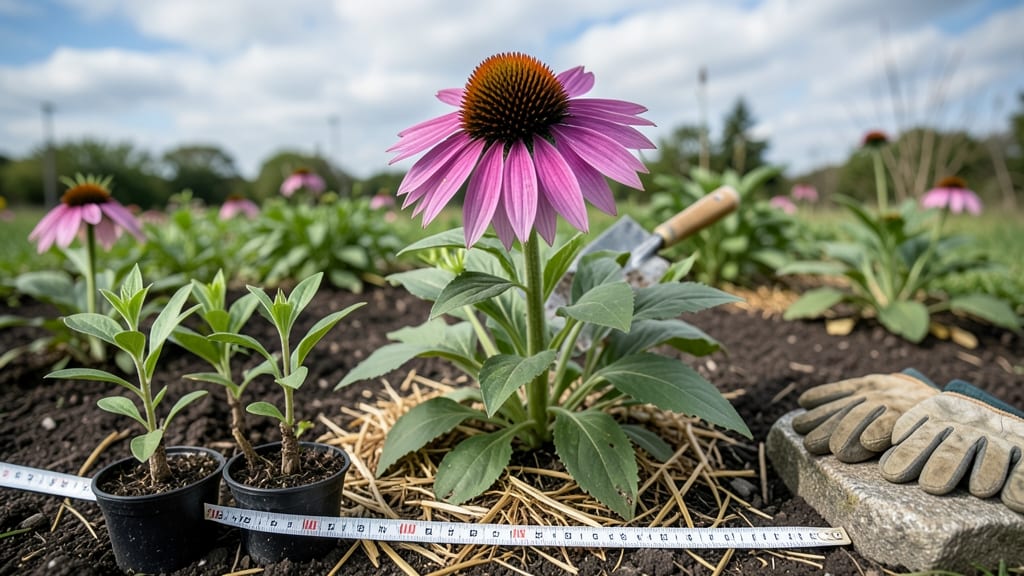
Planting coneflowers too close together means you’ll need to learn how far apart to plant coneflowers for fewer blooms, weaker stems, and a battle with pests 🌼 — the key to vibrant, long-lasting flowers starts with the right spacing.
You’ve probably planted them side by side, only to watch the stems lean and the blooms shrink by midseason. That’s not just a guess—it’s how overcrowding steals sunlight and air from your plants, leaving them struggling to thrive.
Whether you’re working with purple coneflowers, white varieties, or dwarf types, spacing makes all the difference. Too far apart, and you waste space; too close, and you risk disease. Below, I’ll break down the exact distances for full sun, partial shade, and even container gardening.
By the end, you’ll know how to space your coneflowers for stronger roots, bigger blooms, and a garden that stays healthy all season. Let’s get started!
Ideal coneflower spacing by variety: purple coneflower, white coneflower, and more
Getting your coneflower spacing right is the difference between a thriving pollinator magnet and a sad, leggy mess. Each variety—whether it's the classic purple coneflower (Echinacea purpurea) or the elegant white coneflower (Echinacea pallida)—has unique needs.
Too close, and you'll battle fungal diseases and weak stems. Too far apart, and your garden will look sparse. Let’s break it down by type so you can plant with confidence.
Coneflowers are perennial powerhouses, but their mature size and growth habits vary wildly. Dwarf varieties like 'White Swan' stay compact, while tall cultivars like 'Magnus' can reach 5 feet or more.
Proper spacing ensures every plant gets the sunlight and air circulation it needs to shine. Plus, it keeps your garden looking intentional, not chaotic.
Here’s the golden rule: Space coneflowers based on their mature width, not their current size. A 12-inch seedling today could be a 3-foot giant in two years. Below, I’ve mapped out the ideal spacing for the most popular varieties, including tips for containers and crowded gardens.
| Variety | Mature Height | Mature Width | In-Ground Spacing | Container Spacing | Notes |
|---|---|---|---|---|---|
| Purple Coneflower (Echinacea purpurea) | 2–4 ft | 1.5–2 ft | 18–24 inches apart | 1 plant per 10-inch pot | Most popular; adaptable to partial shade. |
| White Coneflower (Echinacea pallida) | 2–3 ft | 1–1.5 ft | 12–18 inches apart | 1 plant per 8-inch pot | Drought-tolerant; loves full sun. |
| Dwarf Varieties ('White Swan', 'Sombrero') | 1–2 ft | 1–1.5 ft | 12 inches apart | 1–3 plants per 12-inch pot | Perfect for borders or containers. |
| Tall Varieties ('Magnus', 'Green Envy') | 4–5 ft | 2–3 ft | 24–36 inches apart | 1 plant per 14-inch pot | Stake tall varieties to prevent flopping. |
| Green Coneflower (Echinacea paradoxa) | 2–3 ft | 1.5–2 ft | 18 inches apart | 1 plant per 10-inch pot | Unique green blooms; loves moist soil. |
For in-ground planting, dig holes twice as wide as the root ball but only as deep. This encourages roots to spread outward, not downward. If you’re planting in containers, choose pots with drainage holes and use a well-draining potting mix.
Remember, coneflowers hate soggy feet—amend heavy clay soil with compost or sand to improve drainage.
Pro tip: If you’re planting a mixed border, group coneflowers with plants of similar height and spacing needs. Pair tall varieties like 'Magnus' with black-eyed Susans or Russian sage, while dwarf coneflowers complement salvias or catmint. This creates a cohesive look while maximizing airflow.
In small gardens or urban spaces, you can edge coneflowers closer together—just 10–12 inches apart—but be prepared to thin them as they mature. Alternatively, use container gardening to grow multiple varieties in a single large pot.
For example, a 24-inch pot can comfortably hold 3–4 dwarf coneflowers or 1 tall variety with companions like lavender.
One common mistake? Assuming all coneflowers are the same. Echinacea pallida, for instance, stays narrower than Echinacea purpurea, so cramming them together leads to overcrowding. Always check the plant tag or variety guide for mature size estimates. If you’re unsure, err on the side of more
How spacing affects coneflower growth: common mistakes and pro tips
Coneflowers may look tough, but they’re surprisingly sensitive to crowding. When planted too closely, their stems weaken from competing for nutrients and sunlight, leading to floppy blooms and increased susceptibility to powdery mildew.
I’ve seen gardens where coneflowers struggle to reach their full 3-foot height because neighboring plants block sunlight—don’t let that happen to yours!
Another common mistake? Ignoring your local climate. In hot, dry regions like USDA Zone 7-9, coneflowers need extra space to avoid root competition during drought.
Meanwhile, in cooler climates like Zone 5-6, slightly tighter spacing can work because the slower growth reduces competition. Always check your microclimate before planting!
⚠️ callout warning
Planting coneflowers closer than 12 inches creates a humid microclimate where fungal spores thrive. I’ve had to remove entire clumps of coneflowers because powdery mildew spread like wildfire in tight groups. Rule of thumb: 18-24 inches apart for standard varieties, 12-15 inches for dwarf types like 'White Swan'.
Pro Tip: If your soil is heavy clay, increase spacing to 24 inches—poor drainage + crowding = recipe for rot.
Soil type plays a bigger role than most gardeners realize. In sandy soil, coneflowers spread roots wider to find moisture, so give them 24-inch spacing. But in loamy soil, the ideal 18-inch gap works perfectly because roots stay compact.
I once planted Echinacea pallida in sandy soil at 18 inches—by summer, their roots were competing with neighbors for water, and the blooms shriveled up!
Don’t forget about companion plants! Pair coneflowers with black-eyed Susans (also 18-24 inches apart) or Russian sage (which thrives at 24-36 inches). These plants share similar water and sunlight needs, creating a low-maintenance pollinator haven.
Avoid planting near mint or invasive ground covers, though—they’ll choke out your coneflowers faster than you can say "weed war."
Here’s my go-to spacing checklist for coneflowers: ☑️ Standard varieties (e.g., 'Magnus'): 18-24 inches apart ☑️ Dwarf varieties (e.g., 'White Swan'): 12-15 inches apart ☑️ Heavy clay soil: 24 inches apart ☑️ Sandy soil: 24-30 inches apart ☑️ Container planting: 1 plant per 12-inch pot (or 3 plants in a 18-inch container)
One last pro tip: If you’re dividing established clumps, space the new sections 2 feet apart immediately. I’ve seen gardeners replant divisions too close, and within a year, the center plants wilt while the outer ones flourish.
Give them room to re-establish roots—your future blooms will thank you! 🌼