
Flowers
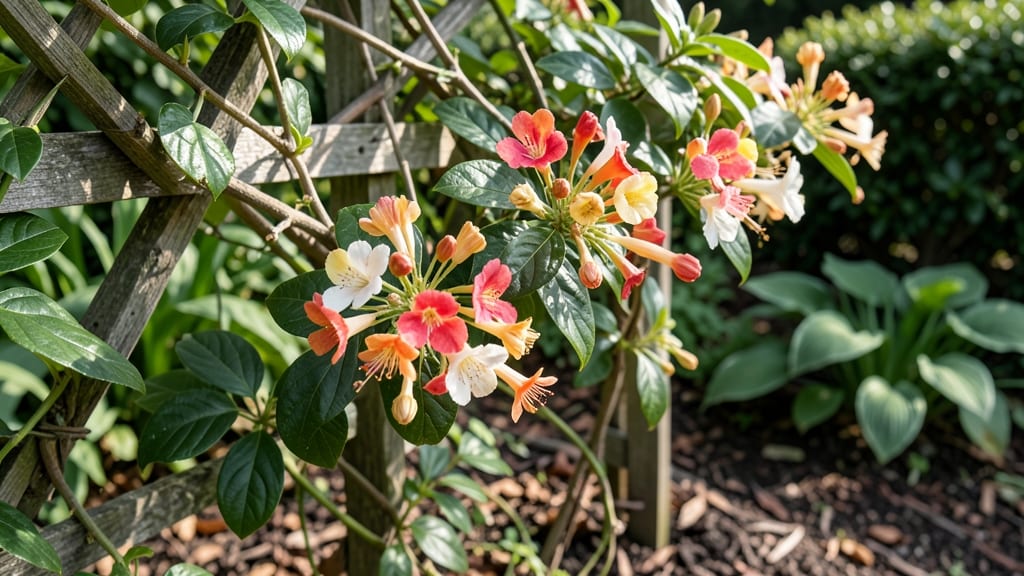
The vibrant honeysuckle flower colors you choose can turn your garden into a pollinator paradise 🌸 — and the right shades make all the difference for both beauty and buzzing visitors.
Picture this: a cascade of golden yellows luring hummingbirds at dawn, deep purples drawing bees in the afternoon, and soft pinks creating a romantic evening glow.
But not all honeysuckles shine equally—some fade fast, while others stay bold through summer's heat. The secret? Picking colors that match your climate and pollinator goals.
From creamy whites that glow under moonlight to fiery oranges that stop traffic, each hue tells a story about fragrance, bloom time, and even soil needs. Whether you're dressing up a trellis or filling containers, the right color palette keeps your garden thriving—and your visitors coming back for more.
Here's how to mix shades for year-round interest, pair them with complementary plants, and create a fragrant escape that works as hard as it looks. Let's dive into the colors that make honeysuckles the star of any garden.
10 Stunning honeysuckle flower colors and their unique characteristics
Honeysuckle vines are nature's living tapestry, weaving vibrant colors that attract pollinators and brighten any garden space. The color spectrum of honeysuckle flowers ranges from soft pastels to bold, fiery hues, each with distinct fragrance and bloom timing.
Whether you're designing a pollinator paradise or adding vertical interest, understanding these color characteristics will help you make the best selections for your landscape.
From the delicate pale yellow of 'Serenade' to the deep purple-red of 'Bellona', each honeysuckle variety offers unique visual and ecological benefits. Some varieties bloom early to support spring pollinators, while others extend the season into fall.
Let's explore the most stunning honeysuckle colors and what makes each one special for your garden.
| Color Variety | Fragrance Intensity | Bloom Time | Growth Habit | Pollinator Appeal |
|---|---|---|---|---|
| Golden Yellow ('Lemoinei') | Very Strong | Early Summer | Fast Climber (15-20 ft) | Bees & Butterflies |
| Cream White ('Annabelle') | Moderate | Mid-Summer | Compact (8-10 ft) | Hummingbirds |
| Deep Purple ('Bellona') | Strong | Late Summer | Vigorous (15-25 ft) | Bees & Moths |
| Pink ('Grace') | Very Strong | Early to Mid-Summer | Medium (10-15 ft) | Butterflies & Bees |
| Coral Red ('Tikibee') | Moderate | Mid-Summer | Bushy (6-8 ft) | Hummingbirds |
| Pale Yellow ('Serenade') | Light | Early Summer | Trailing (10-12 ft) | Bees |
| Orange-Red ('Tikibee') | Strong | Mid to Late Summer | Compact (6-8 ft) | Hummingbirds & Bees |
| Lavender ('Serotina') | Very Strong | Late Summer | Fast (15-20 ft) | Moths & Bees |
| White ('Pallida') | Moderate | Early Summer | Medium (10-12 ft) | Butterflies |
| Burgundy ('Mandarin') | Strong | Late Summer | Vigorous (15-20 ft) | Hummingbirds |
The golden yellow of 'Lemoinei' is one of the most popular honeysuckle colors, known for its intense fragrance that fills the air on warm summer days. This variety is a pollinator magnet, especially for bees and butterflies, making it perfect for cottage gardens or wildlife-friendly landscapes.
Its early bloom time also provides essential nectar when other flowers are just beginning to open.
'Annabelle' with its creamy white blooms offers a softer contrast to bolder colors. This variety has a moderate fragrance and thrives in partial shade, making it ideal for areas where full sun isn't available.
Its compact growth habit also works well for smaller gardens or container plantings, adding vertical interest without overwhelming the space.
For those who love deep purple hues, 'Bellona' delivers with striking flowers that catch the eye from a distance. This variety has a strong fragrance and blooms later in the
How honeysuckle colors attract pollinators: a science-backed guide
Honeysuckle flowers aren't just beautiful—they're nature's pollinator magnets. Their vibrant colors and hidden ultraviolet patterns guide bees, butterflies, and hummingbirds with precision. While we see striking yellows, purples, and pinks, pollinators detect invisible signals that make certain hues irresistible.
Understanding these color secrets helps you design a garden that buzzes with life all season long.
The secret lies in flower pigments and UV reflection. What appears red to us might look purple to bees, while yellow blooms often contain UV patterns invisible to human eyes.
These hidden guides create landing zones that pollinators instinctively follow. For example, 'Golden Trumpet' honeysuckle with its bright yellow flowers contains UV patterns that form bullseye targets for bees.
- 1 Yellow Honeysuckle (e.g., 'Lemoinei') attracts bees and butterflies with UV patterns forming landing platforms. Bees see these as high-energy food sources.
- 2 Purple Varieties (e.g., 'Mandarin') use UV nectar guides that hummingbirds detect as bright flashes while hovering. These colors appear blue-green to birds.
- 3 Pink and Red (e.g., 'Tikibee') contain anthocyanins that signal ripe nectar to pollinators. These hues appear grayish to bees but still attract them through scent.
- 4 White Flowers (e.g., 'White Honeysuckle') rely on scent and UV contrast since they lack bright pigments. They're night-blooming pollinator favorites like moths.
- 5 Color combinations create pollinator superhighways. Plant yellow + purple honeysuckles together to guide bees from early blooms to late-season flowers.
To maximize pollinator visits, plant honeysuckles with complementary colors in clusters. For example, pairing 'Golden Trumpet' (yellow) with 'Mandarin' (purple) creates a visual spectrum that attracts different pollinators throughout the day. Bees prefer yellow and blue hues, while hummingbirds are drawn to red and purple flowers with tubular shapes.
Pro tip: Avoid double-flowered varieties like 'Abundance' if your goal is pollination. These sterile blooms lack the nectar and pollen that sustain pollinator populations. Instead, choose single-flowered types with exposed reproductive parts. Even the leaf arrangement matters—alternating leaves create airflow paths that help pollinators navigate the vine.
Create a pollinator-friendly timeline by selecting honeysuckles with staggered bloom times. Start with early yellow varieties in spring, transition to pink and red mid-season, and finish with purple blooms in late summer. This ensures continuous food sources for migrating pollinators.
Remember, the more diverse your color palette, the more species you'll attract—think beyond just honeysuckle to include coneflowers, bee balm, and lavender for a complete ecosystem.
Your garden can become a pollinator paradise by understanding these color codes. The next time you choose honeysuckle varieties, consider not just their beauty, but their invisible signals that create a thriving habitat.
With the right color combinations and plant pairings, you'll transform your space into a buzzing, fluttering oasis that benefits both your garden and local wildlife. 🌸