
Aphids
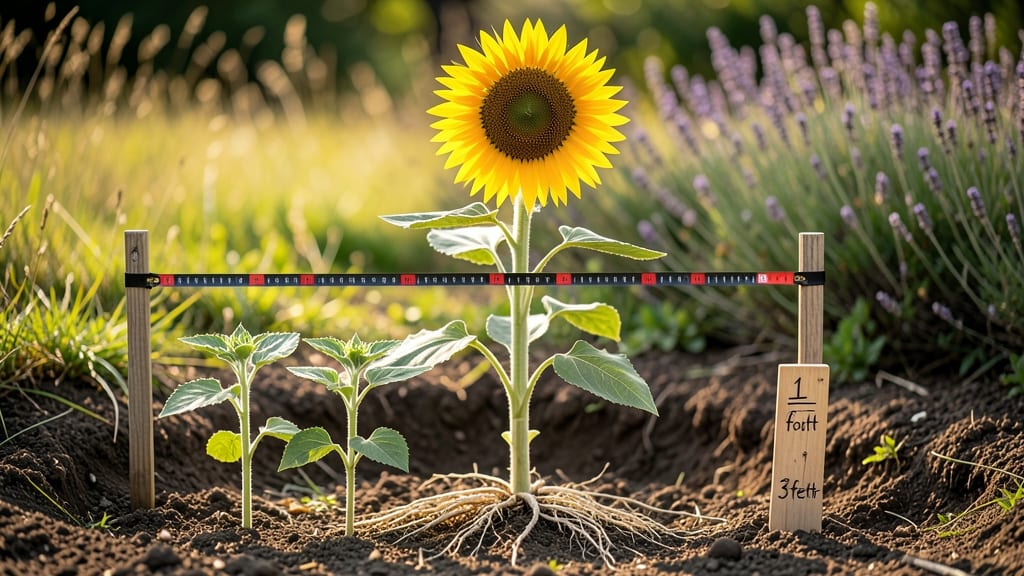
Sunflowers do spread, but not in the way you might think — their roots dig deep while their tops reach for the sky, creating a striking balance that gardeners can work with.
Picture this: a 6-foot-tall 🌻 standing proudly in your garden, its roots stretching 3-5 feet below ground while spreading just 1-2 feet outward. That’s the secret to their space-saving magic, though many gardeners assume they’ll take over like weeds.
If you’ve ever worried about sunflowers crowding out your other plants or turning your garden into a wildflower jungle, you’re not alone. The good news? Their spread is predictable, and with the right planting strategies, you can enjoy their towering beauty without the chaos.
In this guide, I’ll break down how sunflowers spread—both above and below ground—so you can plan your garden layout with confidence. You’ll also discover 5 simple tricks to keep them in check while maximizing their stunning presence.
How far sunflower roots spread: the science behind their growth pattern
Sunflowers may seem like simple, cheerful additions to your garden, but their root systems are far more complex than most gardeners realize. While they don't spread aggressively like invasive weeds, their roots can extend surprisingly far—both laterally and vertically—depending on the variety you choose.
Understanding these patterns helps you design a space-efficient layout without sacrificing those iconic sunflower blooms.
The key to managing sunflower spread lies in their taproot system, which grows deep to anchor the plant while also sending out smaller lateral roots.
Unlike shallow-rooted plants, sunflowers don’t form dense underground networks, making them less likely to crowd neighboring plants—though their height can still create shade competition. Let’s break down how far these roots actually reach and what that means for your garden design.
🌱 Summary-Table: Sunflower Root Spread by Variety
| Variety Type | Lateral Spread (Width) | Root Depth | Mature Height | Spacing Needs |
|---|---|---|---|---|
| Dwarf Varieties (e.g., 'Teddy Bear', 'Moulin Rouge') | 12–18 inches | 2–3 feet | 1–3 feet | 12–18 inches apart |
| Semi-Dwarf (e.g., 'Autumn Beauty', 'ProCut') | 18–24 inches | 3–4 feet | 3–6 feet | 2–3 feet apart |
| Standard (e.g., 'Russian Giant', 'Mammoth') | 24–36 inches | 4–6 feet | 8–16 feet | 3–4 feet apart |
| Giant Varieties (e.g., 'Colossus', 'Mammoth Russian') | 36+ inches | 5–7 feet | 10–16 feet | 4–6 feet apart |
As the table shows, dwarf sunflowers are the most space-efficient option, with roots spreading just 12–18 inches wide and reaching depths of 2–3 feet. This makes them ideal for container gardening or small urban plots.
In contrast, giant varieties like 'Mammoth Russian' can spread 36+ inches laterally and plunge 5–7 feet deep, requiring generous spacing to avoid competition for nutrients and water.
One common misconception is that sunflowers spread aggressively like invasive perennials. However, their roots don’t form rhizomes or runners, which are the primary drivers of invasive spread. Instead, sunflowers rely on their taproot system, which grows straight down and branches out moderately.
This makes them far less likely to take over your garden than plants like mint or bamboo—but their height and shade can still create challenges if not spaced properly.
The depth of sunflower roots is particularly impressive, often extending 3–5 times deeper than their above-ground height. This deep root system helps them access water and nutrients from lower soil layers, making them more drought-tolerant than many gardeners assume.
However, in compacted or rocky soils, their roots may struggle to penetrate deeply, leading to stunted growth or leaning stems. Amending the soil with compost or organic matter before planting can encourage healthier root development.
If you’re growing sunflowers in containers or raised beds, their root depth becomes a critical factor. Most dwarf varieties thrive in 5-gallon pots, while semi-dwarf and standard types need at least 15–25 gallons of soil to accommodate their roots.
For in-ground planting, ensure your garden bed is at least 12–18 inches deep to avoid root binding, which can stress the plant and reduce flower production.
Another factor influencing sunflower spread is their seed dispersal habit. While sunflowers don’t spread via underground runners, they self-seed prolifically, which can lead to unwanted seedlings in subsequent years. To manage this, deadhead spent blooms by removing the seed heads before they mature.
If you’re okay with natural reseeding, simply thin seedlings to your desired spacing—typically 12–24 inches apart—to prevent overcrowding.
For gardeners with limited space, succession planting is a smart strategy. Instead of planting all your sunflowers at once, stagger them in 2–3 week intervals. This ensures you always have blooms without the risk of
5 Space-saving sunflower planting strategies to prevent crowding
Sunflowers might seem like they need endless space, but with the right approach, you can grow them in even the smallest gardens. The key is understanding how they spread and using smart planting techniques to control their growth.
Whether you're dealing with giant varieties or dwarf sunflowers, these strategies will keep your garden organized and beautiful.
Sunflowers spread primarily through their root systems and self-seeding habits. While they aren't invasive like some plants, their seeds can easily scatter, leading to unwanted volunteers in future seasons. By implementing these five techniques, you can prevent overcrowding while still enjoying a stunning sunflower display.
- 1. Choose dwarf varieties (1-3 ft tall) for containers or small gardens. Varieties like 'Teddy Bear' or 'Moulin Rouge' stay compact while still producing vibrant blooms.
- 2. Use companion planting to limit spread. Pair sunflowers with bush beans or marigolds, which create natural barriers and reduce seed dispersal.
- 3. Plant in succession with 2-3 week intervals. This prevents all sunflowers from flowering at once, reducing competition for nutrients and space.
- 4. Train tall varieties on trellises or stakes. This not only saves space but also prevents stems from flopping over, which can lead to root competition.
- 5. Deadhead spent blooms to prevent self-seeding. Remove seed heads before they mature to stop unwanted sunflowers from popping up next season.
Start with proper spacing recommendations based on sunflower type. Dwarf varieties need only 12-18 inches apart, while standard types require 2-3 feet of space. This spacing ensures roots don't compete for nutrients, which can stunt growth and lead to leggy stems.
For container gardening, use large pots (15+ gallons) with well-draining soil. Place one sunflower per container to avoid overcrowding, and choose varieties like 'Little Becka' that thrive in confined spaces. Containers also make it easy to move sunflowers to optimal sunlight locations.
If you notice sunflowers spreading beyond your desired area, don't panic. Simply transplant seedlings to new locations while they're young. This is especially useful for controlling self-seeding in perennial garden beds where you want to maintain a tidy appearance.
With these strategies, you can enjoy a sunflower garden that's both space-efficient and visually stunning. Whether you're working with a tiny balcony or a sprawling backyard, sunflowers can thrive without taking over your garden.