
Flowers
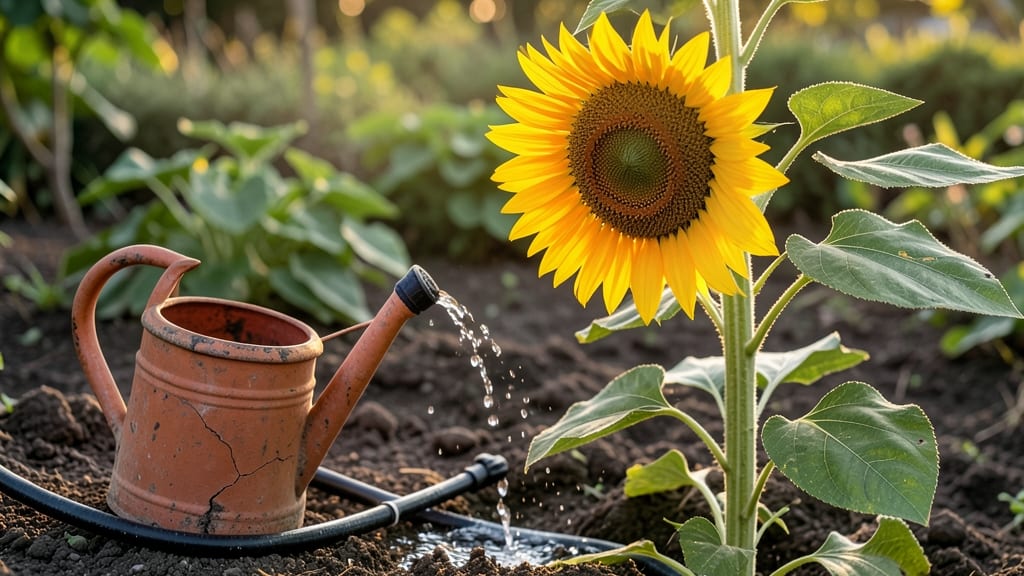
Do sunflowers need a lot of water to grow tall and strong? Their thirst isn’t as extreme as you might think—especially once they’re established.
Picture this: you’re watering your 🌻 sunflowers every day, only to watch their stems weaken or leaves yellow. That’s the classic overwatering trap, and it’s more common than you’d expect. The truth? These drought-tolerant giants actually prefer deep, infrequent watering over frequent shallow drinks.
In USDA Zone 6a, where spring planting kicks off in April, seedlings need consistent moisture, but mature plants can go a week without water in dry spells. The key is understanding their stages—seedlings, flowering, and maturity—and adjusting your watering schedule accordingly.
Below, I’ll break down exactly how much water sunflowers need at each growth phase, how to spot over- or underwatering, and tips to keep them thriving without wasting a drop.
Sunflower watering basics: how much water do they actually need?
Sunflowers might look like they need constant hydration with their towering stems and broad leaves, but the truth is more nuanced. These hardy plants actually develop deep taproots that let them access water deep underground once established.
The key is understanding their hydration needs at each growth stage—seedlings crave moisture, while mature plants can handle surprising drought tolerance.
Most gardeners assume sunflowers need abundant water daily, but overwatering is a common mistake that leads to root rot and weak stems. The secret lies in deep, infrequent watering that encourages strong root development.
Let’s break down exactly how much water sunflowers need—and when to adjust based on your climate.
| Growth Stage | Water Frequency | Depth | Soil Moisture Goal | Climate Adjustments |
|---|---|---|---|---|
| Seedlings (0-4 weeks) | Every 2-3 days | 1-2 inches | Consistently moist | Hot/dry areas: daily |
| Vegetative (4-8 weeks) | Every 3-5 days | 3-4 inches | Moist but not soggy | Rainy areas: reduce by 30% |
| Flowering (8-12 weeks) | Every 5-7 days | 4-6 inches | Deep moisture | Drought: extend to 10 days |
| Mature (12+ weeks) | Every 7-14 days | 6+ inches | Dry at surface | Arid zones: minimal water |
The root depth of sunflowers is their superpower. Within just 4-6 weeks, their roots can extend 3-5 feet deep, allowing them to tap into groundwater reserves. This is why mature sunflowers often survive without supplemental watering in dry spells—especially in well-draining soil.
The key is to water deeply but infrequently to encourage this root development.
To check if your sunflowers need water, perform the finger test: stick your index finger 2-3 inches into the soil. If it feels dry at this depth, it’s time to water.
For seedlings, aim for consistently moist soil, but avoid letting them sit in waterlogged conditions. Overwatering at this stage can cause damping-off disease, which kills young plants.
Your local climate plays a huge role in watering frequency. In hot, dry regions like Arizona or California, sunflowers may need watering every 2-3 days during peak summer, while in cooler, humid areas like the Pacific Northwest, you might only need to water weekly.
Always adjust based on rainfall—1 inch of rain typically replaces one watering session for mature plants.
Mulching around your sunflowers is a game-changer for water retention. A 3-inch layer of organic mulch (like straw or wood chips) helps maintain even soil moisture and reduces evaporation.
This is especially helpful in sandy soils, which drain water quickly. Just keep the mulch 2-3 inches away from the stem to prevent rot.
One of the biggest myths about sunflowers is that they need constant watering to produce large blooms. In reality, overwatering can reduce flower size by diluting nutrients in the soil. Focus on deep watering sessions rather than frequent shallow drinks.
Early morning is the best time to water, as it allows foliage to dry quickly, reducing the risk of fungal diseases like powdery mildew.
If you’re growing sunflowers in containers or raised beds, they’ll need more frequent watering because soil dries out faster. In these cases, check moisture daily and water when the top inch of soil feels dry.
Container-grown sunflowers also benefit from drip irrigation systems, which deliver water directly to the roots without wetting the leaves.
Remember, sunflowers are drought-tolerant once established, but they still need consistent moisture during their first 6-8 weeks of growth. By understanding their root development stages and adjusting your watering schedule accordingly, you’ll grow healthier, stronger sunflowers that reach their full potential—without wasting a drop.
Smart watering schedule: when and how to water sunflowers for maximum growth
Sunflowers thrive with consistent moisture but despise soggy soil. Their water needs change dramatically from seedling stage to full maturity. Understanding these shifts prevents common pitfalls like root rot or weak stems that snap under their own weight. Let’s break down the perfect watering routine for each growth phase.
For young seedlings, focus on keeping the soil evenly moist but never waterlogged. Their shallow roots need frequent hydration—about every 2-3 days—especially in hot climates. Overhead watering works here, but avoid wetting the leaves to prevent fungal diseases like powdery mildew.
Once sunflowers reach flowering stage (around 6-8 weeks), they develop deeper roots and become more drought-tolerant. At this point, deep watering every 3-5 days is ideal. Let the top inch of soil dry out between waterings to encourage strong root development and prevent weak stems.
Do Sunflowers Need a Lot of Water?
Pros of Adequate Watering
- 🌱 Healthy growth: Consistent moisture supports strong stems and vibrant blooms
- 🌿 Disease prevention: Proper hydration reduces risk of fungal infections
- 💧 Nutrient absorption: Well-watered plants uptake fertilizer more efficiently
Cons of Overwatering
- 🌧️ Root rot risk: Soggy soil suffocates roots and invites pathogens
- 🌱 Weak stems: Excess moisture leads to floppy, break-prone plants
- 💧 Wasted water: Overwatering harms soil structure and drains resources
💡 Key Tip: Use your finger to check soil moisture—if the top inch feels dry, it's time to water!
Mature sunflowers (after flowering) are surprisingly drought-resistant. At this stage, water every 7-10 days unless your region experiences extreme heat. Deep watering—about 1-2 inches per week—is better than frequent light watering, which encourages shallow roots.
For drip irrigation, place emitters near the base of the plant to deliver water directly to the roots. This method saves water and reduces disease risk compared to overhead sprinklers, which can wet leaves and spread fungal spores.
If using sprinklers, water early in the morning to allow foliage to dry quickly.
Regional climate matters! In hot, dry climates, sunflowers may need watering every 2-3 days during peak summer, while cooler regions can stretch watering to every 5-7 days. Always adjust based on rainfall—skip watering if you’ve had 1 inch of rain in the past week.
Mulch around your sunflowers with 2-3 inches of organic mulch (like straw or wood chips) to retain moisture and regulate soil temperature. This simple step reduces watering frequency by up to 30% while keeping roots cool and healthy. Just remember to keep mulch away from the stem to prevent rot.