
Flowers
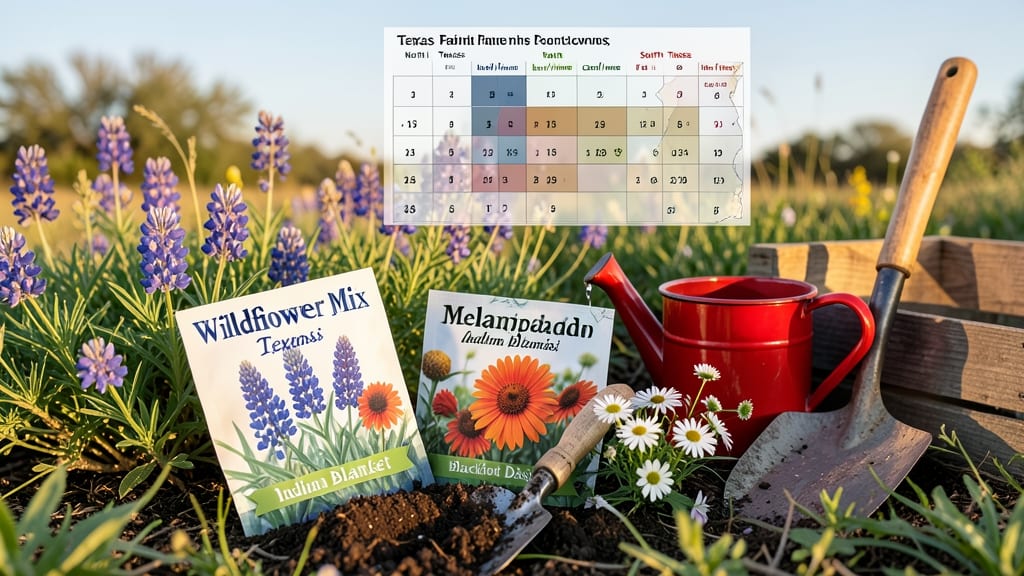
Planting flowers in Texas means timing them after your last frost date and before the summer heat hits—whether you're in North, Central, or South Texas.
Texas gardeners face a unique challenge: scorching summers and unpredictable freezes demand precise timing to grow vibrant, thriving 🌸—without wasting seeds or money.
If you plant too early, a late frost will wipe out your seedlings. Too late, and the heat zaps their energy before they even bloom. The key is knowing your region’s frost-free window and choosing flowers that match your climate.
In this guide, I’ll break down the best months to plant annuals, perennials, and seasonal flowers across Texas—plus heat-tolerant varieties that thrive in our intense sun.
Texas flower planting calendar by region: avoiding frost and heat zones
Texas gardeners know timing is everything—especially when unpredictable freezes and 100°F+ summers can turn a thriving garden into a crispy disaster. The key to success? Planting flowers at the right time for your USDA zone and adjusting for heat-tolerant varieties.
North Texas (Zone 7b-8a) has later frosts, while South Texas (Zone 9a-9b) enjoys nearly year-round growing. Let’s break it down by region so you can avoid frost damage and maximize blooms.
First, know your last frost dates: North Texas typically sees frost until mid-February, Central Texas until early February, and South Texas rarely dips below freezing. For cool-season flowers like pansies or snapdragons, plant 6-8 weeks before your last frost.
For heat-lovers like zinnias or lantana, wait until soil warms to 60°F+—usually April-May in most regions. Miss these windows, and you’ll either lose plants to frost or watch them wilt in summer’s brutal heat.
Here’s a quick comparison of planting windows by region, including ideal months, frost risks, and heat-adapted varieties to prioritize:
In North Texas (Zone 7b-8a), where frosts linger longer, focus on hardy annuals like zinnias and cosmos for summer color. Start seeds indoors in February for early blooms, then transplant after mid-April when soil temperatures stabilize.
For fall planting, aim for September to beat the first frost in December. Mulch heavily to protect roots from temperature swings—this is critical in zones with unpredictable freezes.
Central Texas (Zone 8a-8b) offers a longer growing season, but summer heat can be brutal. Plant heat-tolerant varieties like salvia or gaillardia in May-June once nights stay above 70°F. For cool-season flowers, September is your best bet—these plants will thrive through winter rains and bloom until spring.
Avoid planting tender annuals like marigolds too early; they’ll bolt in the heat.
South Texas (Zone 9a-9b) is the lucky region with minimal frost risk, but even here, summer humidity and heat stress demand smart choices. Plant drought-resistant natives like Mexican sunflower or bluebonnets in fall (September-October) for spring blooms.
For summer color, opt for Portulaca or Verbena, which thrive in full sun and poor soil. Water deeply but infrequently—most South Texas flowers hate soggy roots.
Pro tip: Use seasonal mulch to regulate soil temperature. In spring, a 2-inch layer of straw keeps roots cool; in fall, leaves or pine straw insulate against unexpected frosts. For container gardens, move potted plants to shaded areas during peak afternoon heat (2 PM–6 PM) to prevent wilting.
This small adjustment can mean the difference between wilted petals and vibrant blooms.
Remember, Texas flowers aren’t one-size-fits-all. Native wildflowers like blackfoot daisy or winecup need
Best heat-tolerant flowers for Texas gardens and their ideal planting months
Texas summers can be brutal, but with the right heat-tolerant flowers, you can keep your garden bursting with color all season long. These drought-resistant varieties thrive in our 100°F+ temperatures and require minimal extra care once established.
The key is planting at the right time—typically after the last frost date—which varies slightly by region but generally falls in March or April for most of Texas.
I’ve tested these top 10 heat-loving flowers in my own garden, and they consistently deliver vibrant blooms with minimal fuss. Whether you’re in North Texas (Zone 7b-8a), Central Texas (Zone 8a-8b), or South Texas (Zone 9a-9b), these varieties will adapt to your local climate.
The secret? Planting them when soil temperatures reach 60°F or warmer and giving them full sun exposure (6+ hours daily).
| Flower | Best Planting Month | Sun Needs | Water Needs | Height |
|---|---|---|---|---|
| Lantana | March–May | Full sun | Low (drought-tolerant) | 1–3 ft |
| Zinnias | April–June | Full sun | Medium | 1–4 ft |
| Blackfoot Daisy | March–April | Full sun | Low | 1–2 ft |
| Mexican Sunflower | April–May | Full sun | Medium | 3–6 ft |
| Portulaca (Moss Rose) | May–July | Full sun | Very low | 3–6 in |
| Salvia (Autumn Sage) | March–April | Full sun | Medium | 2–4 ft |
| Gaillardia (Blanket Flower) | March–May | Full sun | Low | 1–2 ft |
| Verbena | April–June | Full sun | Medium | 1–2 ft |
| ★★★★★5.0(15 reviews) |