
Flowers
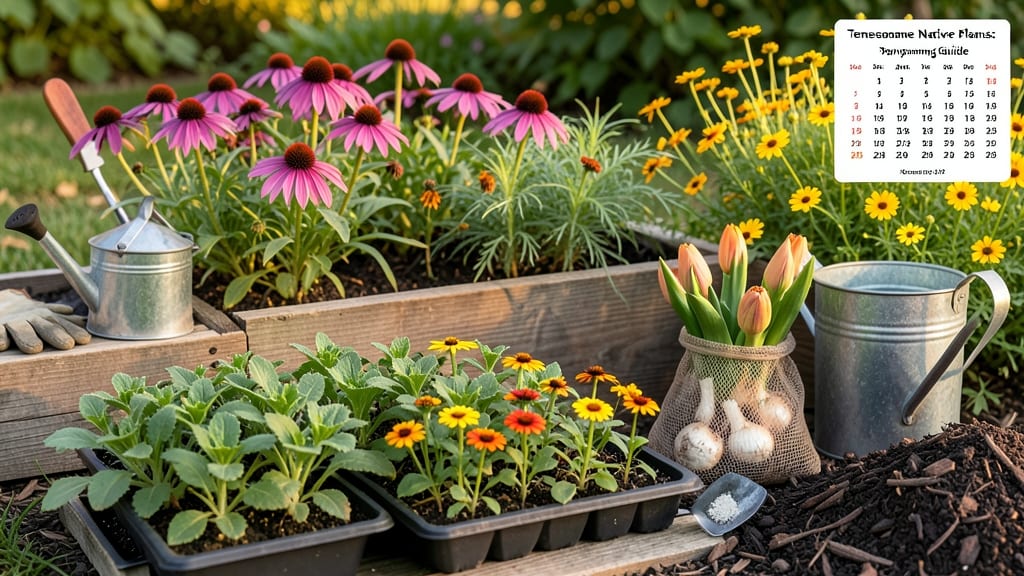
Planting flowers in Tennessee at the right time means the difference between a garden bursting with color by Memorial Day and a season of missed deadlines and wilted blooms.
Tennessee’s diverse climate—from the humid South to the cooler Appalachian foothills—means flower planting deadlines vary dramatically by zone. Get these timelines wrong, and your blooms could arrive late, wilt early, or never take root at all.
Whether you’re in Nashville’s Zone 7b or the Smokies’ Zone 6a, timing matters more than you might think. Annuals like zinnias thrive when planted after the last frost in March or April, while perennials like coneflowers can handle a fall planting in September or October.
Below, I’ll break down the exact windows for your zone, plus pro tips to stretch your season—so you can enjoy 🌸 from spring to fall without the guesswork.
Tennessee planting zones: when to plant flowers by USDA Zone (5a–8a)
Tennessee spans USDA Zones 5a through 8a, creating a gardening landscape as diverse as its landscapes. In the Smoky Mountains (Zone 5a-6a), frost lingers until mid-April, while West Tennessee’s Zone 8a enjoys frost-free conditions by mid-February.
These differences mean your spring blooms could arrive weeks apart depending on where you garden.
Understanding your zone helps you time annuals, perennials, and bulbs perfectly. Plant too early, and frost will kill tender seedlings. Wait too long, and your garden might miss peak bloom seasons. Let’s break down the optimal planting windows for each zone to ensure your flowers thrive year-round.
Here’s a quick reference for last frost dates across Tennessee’s zones, which dictate when to start planting most flowers:
For Zone 5a gardeners in the Smokies, wait until after May 15 to plant tender annuals like marigolds or petunias. In Zone 8a, you can start planting heat-loving zinnias or sunflowers as early as February.
Perennials like coneflowers or black-eyed Susans can be planted in early spring or fall across all zones, but timing varies by 1-2 months depending on location.
Bulbs like tulips and daffodils should be planted in fall (October-November), regardless of zone. However, Zone 5a gardeners should plant them 4-6 weeks earlier than those in Zone 8a to ensure they establish roots before winter.
Use soil thermometers to check if soil temps are below 60°F—a sign it’s time to plant.
In high-altitude areas like the Smokies, microclimates matter. A south-facing slope may warm up faster than a north-facing valley, allowing you to plant 2-3 weeks earlier.
Always monitor local frost forecasts and adjust your timeline accordingly. For example, Nashville’s urban heat island can delay frost by 1-2 weeks compared to rural areas.
Fall planting is another critical window. In Zone 5a, aim for early September to give perennials time to root before winter.
In Zone 8a, you can extend planting into early November. Mums and asters thrive when planted in late summer, but avoid planting after mid-October in cooler zones to prevent frost damage.
Container gardening offers flexibility. You can start tender annuals indoors in Zone 5a as early as February, then transplant outdoors after the last frost. In Zone 8a, you might even get two blooming
Best flowers to plant by season in Tennessee (and their exact timing)
Tennessee’s spring blooms arrive earlier in West Tennessee (Zone 7b) than in the Appalachian foothills (Zone 6a), so timing matters. For example, tulips planted in late October will bloom by mid-April in Nashville, while dahlias—a summer favorite—need to wait until after Memorial Day to avoid frost damage.
Even heat-loving zinnias can struggle if planted too early in Zone 6a areas like the Cumberland Plateau.
Microclimates add another layer of complexity. Urban Nashville with its heat islands can push planting windows 2-3 weeks earlier than rural areas, while high-altitude gardens in the Great Smoky Mountains may need to delay tender annuals until mid-May.
Let’s break down the exact timing for each season to ensure your flowers thrive.
🌱 Seasonal Planting Timeline for Tennessee Flowers
- 🌷 Early Spring (Feb–March): Plant hardy bulbs like daffodils and crocuses (Zone 5a–8a) and cool-season annuals such as pansies and snapdragons. Wait until soil temps reach 50°F for tender perennials like lavender.
- ☀️ Late Spring (April–May): The perfect window for annuals like zinnias, marigolds, and petunias. Transplant perennials (e.g., black-eyed Susans) after last frost (typically mid-April in Memphis, late April in Knoxville).
- 🌞 Summer (June–July): Heat-tolerant flowers like lantana, salvia, and sunflowers thrive when planted in early June. Avoid late-summer planting of tender annuals—they’ll bolt or wilt before frost.
- 🍂 Fall (Sept–Oct): Plant bulbs (tulips, daffodils) by mid-October for spring blooms. Cool-season perennials like aster and chrysanthemum can go in September, giving roots time to establish before winter.
- ❄️ Winter (Nov–Jan): No planting for most flowers, but cover soil with mulch to protect dormant perennials. Start seeds indoors (e.g., geraniums, impatiens) in late January for early spring transplants.
For Zone 6a gardeners (e.g., Chattanooga, Bristol), extend your season by using row covers for early spring plantings or black plastic mulch to warm late-summer soil for fall blooms.
In Zone 7b+ (e.g., Memphis, Jackson), you can plant heat-lovers like hibiscus as early as April 15th, but protect them if a late frost is forecasted.
Pro tip: Test soil temperature with a soil thermometer—most annuals need 60°F+ soil to germinate. Perennials like coneflowers can handle cooler soil (as low as 45°F), but wait until air temps are consistently above 50°F at night. Urban heat islands (like downtown Nashville) can be 5–10°F warmer than surrounding areas, so adjust planting dates 1–2 weeks earlier if you’re in a paved or concrete-heavy neighborhood.
Don’t overlook container gardening—it’s a game-changer for small spaces or microclimates. Pots warm up faster in spring, letting you plant marigolds or nasturtiums 2 weeks earlier than in-ground. Just ensure containers have drainage holes and use lightweight potting mix to prevent root rot in Tennessee’s humid summers.
Start with these seasonal standouts for guaranteed color: spring (tulips, bleeding heart), summer (zinnias, black-eyed Susans), fall (mums, asters). Match your flowers to your zone, and your garden will bloom on schedule—no guesswork! 🌼