
Trees
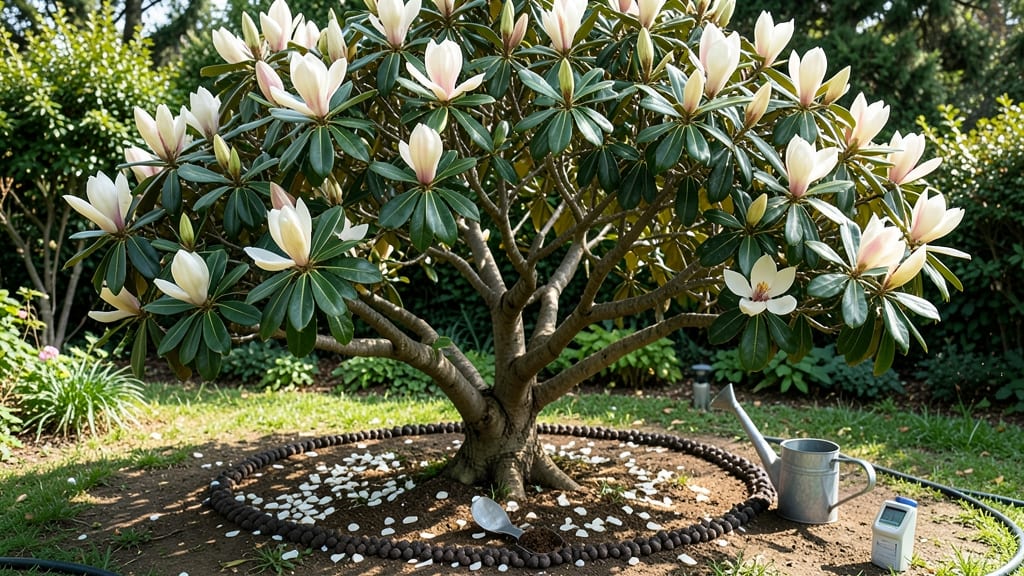
To fertilize flowering trees at the right time means blooms that last all season — and skipping the wrong window can leave you with sparse, underwhelming flowers.
Picture this: You’ve spent months nurturing your 🌸 flowering trees, and now they’re finally ready to burst into color. But if you fertilize too early or too late, you might end up with fewer blooms—or worse, none at all.
The key is knowing when to feed them for maximum impact without overdoing it.
Most gardeners fertilize in early spring, but that’s just the start. The real trick is adjusting your schedule based on your tree’s growth cycle and climate. Whether you’re in a warm zone or a cooler one, timing matters more than the type of fertilizer you use.
In this guide, I’ll break down the exact seasonal windows for fertilizing, how to spot when your trees really need it, and the best types of fertilizer to use—so you can enjoy vibrant blooms year after year.

Best fertilization timeline for flowering trees by season
Timing your flowering tree fertilization is like conducting an orchestra—get it wrong, and the performance falls flat. The key is understanding when your trees are actively growing versus when they’re dormant.
Deciduous varieties (like dogwood or magnolia) and evergreens (such as camellia or crape myrtle) follow different rhythms, but the principle remains: feed them when they’re hungry, not when they’re resting.
Most gardeners make the mistake of fertilizing after blooming, which can actually reduce next year’s flowers. Instead, think of fertilization as a three-act play: early spring to kickstart growth, late spring to support blooms, and fall to build roots for winter.
Let’s break down the science-backed schedule that’ll have your trees bursting with color year after year.
For deciduous trees, the early spring feeding is critical because it aligns with their natural bud break. Think of it as giving them a jumpstart before the leaves even appear.
I once had a redbud tree that refused to bloom until I adjusted my timing—now it’s covered in pink flowers every spring! Use a slow-release fertilizer like 10-10-10 to avoid nutrient spikes that can burn roots.
Evergreens like camellias or azaleas have a different rhythm. They’re semi-dormant in winter but still benefit from a light feeding in early spring and a fall boost. The key is to avoid heavy fertilization during their peak bloom (winter/early spring for many evergreens), as this can stress the plant.
Instead, focus on organic matter like composted leaves or worm castings to improve soil health gradually.
Your climate zone plays a huge role here. In USDA Zone 7 or warmer, you might extend your fall feeding into November, while in Zone 5 or colder, aim to finish by early October.
I’ve seen gardeners in Southern California fertilize their jacarandas as late as December—just don’t let the soil freeze! Always check for frost dates in your area and adjust accordingly.
One common mistake is fertilizing right after planting. Newly planted trees are already stressed from transplant shock, and feeding them can burn delicate roots. Wait 6-12 months before your first feeding, unless the soil test shows extreme deficiencies.
I test my soil every 2-3 years—it’s the only way to know if your trees are truly hungry or if you’re overdoing it.
If you’re using organic fertilizers like compost or fish emulsion, the timing is slightly more flexible. These break down slowly, so you can apply them in early spring and fall without the risk of overfeeding. For synthetic fertilizers, precision is key—follow the label instructions to the letter.
I’ve had crape myrtles that nearly died from leaf burn after a heavy dose of synthetic fertilizer in summer. Always water thoroughly after applying to help distribute nutrients.
Pro tip: Mark your calendar! I use colored flags on my garden stakes to remind me when to fertilize. For example, a red flag in March for early spring feeding and a yellow flag in September for fall prep. This visual cue saves me from missing critical windows.
Signs your flowering tree needs fertilizer (and when to avoid it)
Flowering trees like crape myrtles or dogwoods often show subtle signs when they're hungry for nutrients. Yellowing leaves between the veins or sparse blooms despite good care are classic red flags.
These symptoms often mean your tree needs phosphorus-rich fertilizer to support flower production. But before reaching for that bag, let's diagnose the real issue—because sometimes, the problem isn't hunger at all.
Another clue is stunted new growth or small, weak leaves appearing in spring. This suggests your tree lacks nitrogen or micronutrients like iron or zinc. However, beware of dark brown leaf edges or crispy leaf tips—these are signs of over-fertilization, not a need for more food.
The line between "starving" and "overfed" is thinner than you might think.
⚠️ When to DELAY Fertilizing Flowering Trees
- Drought stress: Wait until soil is moist—fertilizer burns roots when thirsty
- Transplant shock: Hold off for 6-12 weeks after planting
- Pest infestations: Don't fertilize until pests are controlled (aphids steal nutrients)
- Extreme heat: Avoid fertilizing when temps exceed 90°F (shock risk)
- Winter dormancy: Never fertilize in frost-prone months (Dec-Feb in most zones)
🌱 Pro Tip: Always water deeply 24 hours before and after fertilizing to prevent root burn.
Let's talk about bloom patterns—if your tree flowers later than usual or produces fewer blooms each year, it might need a phosphorus boost. Phosphorus (the middle number in NPK ratios) is crucial for flower development.
Look for fertilizers labeled 10-10-10 or 5-10-10 for balanced support. But here's the catch: if your tree is already overloaded with buds but struggling to support them, it might need potassium instead (the last number) for stronger stems.
One of the most misunderstood signs is leaf drop. While some trees naturally shed in fall, sudden leaf drop during growing season could mean root damage from over-fertilization. If you notice blackened roots when checking (gently dig near the drip line), you've likely overdone it.
In this case, flush the soil with water and hold off on fertilizing for 3-4 months to let roots recover.
Season matters too—spring is prime time for fertilizing, but mid-summer applications can stress trees preparing for winter. If you see new growth appearing in late summer, your tree might be pushing too hard and needs a break.
In this case, switch to organic compost instead of synthetic fertilizers to avoid shocking the system. The goal is steady growth, not rapid spikes.
For evergreen flowering trees like camellias, watch for yellowing older leaves first—this often indicates iron deficiency. These trees are particularly sensitive to soil pH, so test your soil before fertilizing.
If pH is above 7.0, iron becomes unavailable, no matter how much fertilizer you add. In this case, use a chelated iron supplement instead of general-purpose fertilizer.
Remember, the best fertilizer is often the one you don't need. If your tree has dark green leaves, healthy new growth, and plenty of blooms, it's likely getting enough nutrients from your existing soil.
The key is observation—learn your tree's natural rhythm and only intervene when you see clear signs of struggle. When in doubt, test your soil before reaching for fertilizer.