
Fertilization
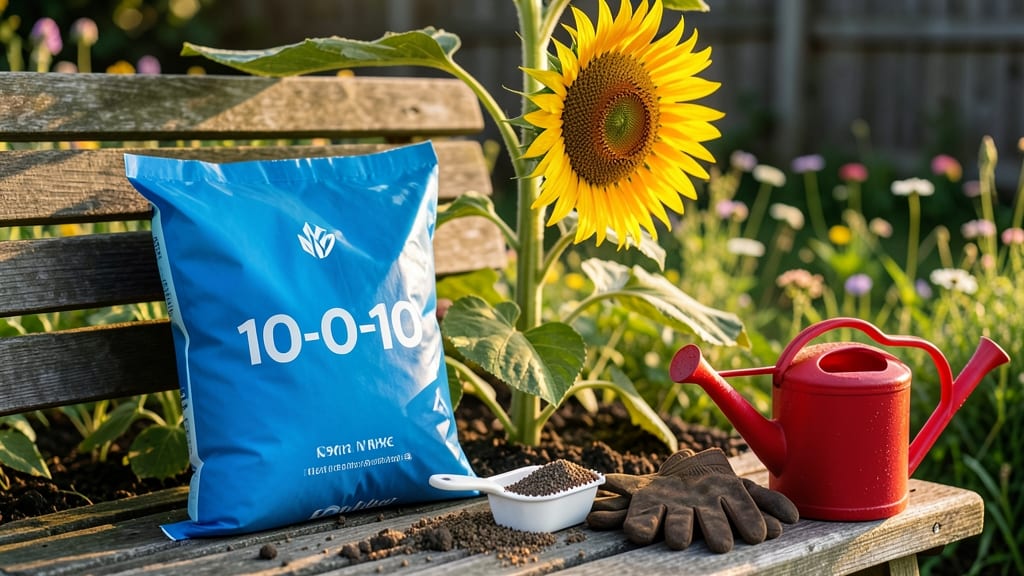
A balanced 10-10-10 fertilizer for sunflowers 🌻 is your secret weapon for towering stems and bold blooms—but only if you use it right.
Picture this: you’ve spent weeks watching those 4-foot seedlings stretch toward the sky, only to see them flop or produce puny flowers. The problem? Too much fertilizer, too soon, or skipping the key stages when your sunflowers need that extra boost.
Here’s the good news: with the right timing, application rates, and a few pro tips, you can avoid nutrient burn and overgrowth while giving your sunflowers everything they need to reach their full potential—up to 16 feet tall.
From planting to flowering, I’ll walk you through exactly when and how to apply 10-10-10, plus organic alternatives and signs your sunflowers are begging for a different approach.

When to apply 10-10-10 fertilizer for sunflowers by growth stage
Sunflowers are nature's skyscrapers, reaching heights of 10-16 feet with the right care. A 10-10-10 fertilizer provides that perfect balance of nitrogen, phosphorus, and potassium to fuel their growth.
But timing is everything—apply it too early or too late, and you risk stunted growth or poor blooms. Let’s break down the critical stages for feeding your sunflowers.
The key to sunflower success lies in matching fertilization with their natural growth cycles. Seedlings need gentle nourishment, while flowering plants demand more nutrients. Skipping stages or overdoing it can lead to nutrient burn or weak stems.
Think of it like building a skyscraper: you wouldn’t pour concrete on the foundation before the frame is ready!
| Growth Stage | When to Apply | Amount per Plant | Notes |
|---|---|---|---|
| Seedling Stage (0-4 weeks) | After first true leaves appear | ½ tsp diluted liquid fertilizer | Light feeding to avoid shocking young roots |
| Vegetative Stage (4-8 weeks) | Every 4 weeks | 1 tbsp granular or 1 tsp liquid | Boosts stem and leaf growth |
| Flowering Stage (8-12 weeks) | When buds form | 1 tbsp granular or 1 tsp liquid | Supports bloom production and seed development |
| Post-Flowering (12+ weeks) | None | — | Focus on harvesting seeds instead |
The seedling stage (first 4 weeks) is delicate—your sunflowers have tiny roots and can’t handle strong fertilizers. Start with a ½ teaspoon of diluted 10-10-10 once the first true leaves appear. This gives them a gentle boost without risking fertilizer burn. Think of it as their first vitamin shot!
As your sunflowers enter the vegetative stage (weeks 4-8), they’ll start growing like crazy—tall stems and broad leaves. This is when you can ramp up to 1 tablespoon of granular 10-10-10 every 4 weeks or a 1-teaspoon liquid feed.
Spread the granules around the base, keeping them 2 inches away from stems to avoid direct contact.
When buds begin to form (around 8 weeks), your sunflowers are ready for their final feeding. Apply another 1 tablespoon of 10-10-10 to support bloom production and seed development.
This is the stage where their vibrant yellow petals will truly shine. Timing here ensures your sunflowers don’t just grow tall—they bloom beautifully.
After flowering, skip the fertilizer entirely. Your sunflowers are now focused on seed production, not growth. Over-fertilizing at this stage can lead to weak stems or even splitting seed heads. Instead, let them mature naturally and harvest the seeds for next year’s planting!
One common mistake is over-fertilizing young plants, which can cause nutrient burn—yellowing leaves or stunted growth. Always water thoroughly after applying fertilizer to help nutrients absorb into the soil. And remember: less is more during the early stages!
For container-grown sunflowers, halve the fertilizer amounts since pots have limited soil volume. Monitor your plants closely—if leaves turn yellow or brown at the edges, you’re likely overdoing it. Adjust your feeding schedule accordingly to keep your sunflowers healthy and thriving.
Pro tip: Pair your 10-10-10 applications with a mulch layer (like straw or grass clippings) to retain moisture and slowly release nutrients. This mimics natural soil conditions and gives your sunflowers a steady supply of food. Your towering sunflowers will thank you with bold blooms and strong stems!
By following this stage-by-stage approach, you’ll avoid the pitfalls of over-fertilizing or under-nourishing your sunflowers. Whether you’re growing dwarf varieties for containers or giant sunflowers in your backyard, timing is the secret to sky-high success. Happy growing!
How to mix and apply 10-10-10 fertilizer for sunflowers without common Mistakes
A 10-10-10 fertilizer provides equal parts nitrogen, phosphorus, and potassium—perfect for sunflowers craving balanced nutrients. But applying it incorrectly can lead to burned roots or stunted growth. The key lies in proper dilution, timing, and soil prep to ensure your sunflowers grow tall and strong without damage.
Before mixing, test your soil’s pH—sunflowers thrive in 6.0 to 7.0 range. If your soil is too acidic or alkaline, adjust with lime or sulfur first. This step prevents nutrient lockout, where sunflowers can’t absorb the fertilizer even if it’s present.
Think of it as giving your plants the best chance to drink up those nutrients.
⚠️ WARNING: Common Mistakes with 10-10-10 Fertilizer ⚠️
⚠️ Wrong dilution for liquid forms—always mix 1 tbsp per gallon of water to avoid salt buildup.
⚠️ Applying during drought stresses plants. Always water 24 hours before and after fertilizing.
For granular 10-10-10, sprinkle 1 tablespoon around the base of each sunflower, keeping it 3 inches away from stems. Gently scratch it into the top 1-2 inches of soil with a hoe or rake.
This method releases nutrients slowly, feeding roots over time. Water thoroughly afterward to activate the fertilizer and wash away excess salts.
If using liquid 10-10-10, dilute 1 tablespoon per gallon of water and apply directly to the soil—not the leaves—to avoid chemical burns. Use a watering can with a rose attachment for even distribution.
Early morning applications prevent evaporation and give roots time to absorb nutrients before the heat of the day.
Timing matters most: apply 10-10-10 fertilizer every 4-6 weeks during the growing season (April to August). Skip fertilizing in fall and winter—sunflowers go dormant and don’t need extra nutrients. For container-grown sunflowers, halve the dose since roots have limited space to absorb nutrients.
Watch for signs of over-fertilization, like crispy leaf edges or stunted growth, and adjust future doses. Healthy sunflowers should show deep green leaves, strong stems, and vibrant blooms without yellowing. With the right approach, your sunflowers will reach their full potential—towering and radiant.