
Planting
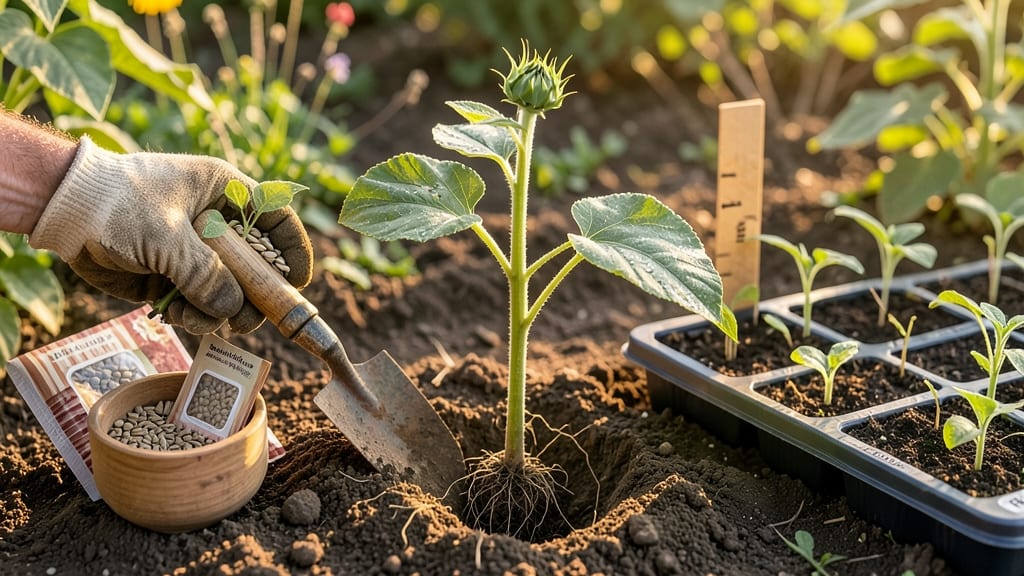
Sunflower seeds planted at the right depth—about 1 inch down—give your towering 🌻 the sturdy start it needs to reach for the sky.
Too shallow, and they’ll dry out before sprouting; too deep, and they’ll struggle to break through the soil. I’ve watched seedlings give up and rot in the ground when planted just a half-inch too deep—don’t let that happen to yours.
Beyond the numbers, soil type and climate play a role. Sandy soil drains faster, so seeds need a slightly deeper planting to hold moisture, while clay holds water longer and can be planted a touch shallower. The goal? A strong stem that supports 10-foot giants without bending.
In this guide, I’ll break down the exact measurements for your sunflower type, how to adjust for your soil, and the 3 signs your seeds are planted perfectly—so you can grow sunflowers that rival the ones in the fields.
Optimal sunflower seed planting depth by variety and soil type
Sunflowers thrive when planted at the perfect depth—too shallow and they struggle to establish roots, too deep and they risk rotting before sprouting. The ideal planting depth varies by sunflower variety and soil type, but most seeds need just 1 inch of coverage for optimal germination.
Understanding these nuances ensures your sunflowers grow strong stems and vibrant blooms from the start.
Sunflower seeds contain stored energy in their cotyledons (seed leaves), which need to access moisture and warmth to sprout. Planting too deep forces seedlings to push harder through the soil, weakening their stems. Meanwhile, shallow planting exposes seeds to drying out or being washed away.
The soil type also plays a role—clay soils hold moisture better, while sandy soils dry out faster, requiring slight adjustments to depth.
Here’s a breakdown of the optimal planting depth for different sunflower types and soil conditions, including why these measurements work best for germination and stem strength.
For giant sunflower varieties, like 'Mammoth' or 'Russian Giant,' the 1-inch depth in loamy soil ensures their deep taproots develop properly. In sandy soil, reducing depth to ½ inch prevents seeds from drying out before sprouting.
Meanwhile, clay soil requires a slightly deeper planting of 1.25 inches to compensate for its slower drainage.
Dwarf varieties, such as 'Teddy Bear' or 'Sunspot,' have smaller seeds and benefit from shallower planting. In loamy soil, a ½-inch depth is ideal, while sandy soil calls for just ¼ inch to avoid moisture loss.
Even in clay soil, dwarf varieties only need ½ inch of coverage, as their roots are less aggressive.
Ornamental sunflowers, like 'Autumn Beauty' or 'ProCut,' strike a balance between giant and dwarf types. They thrive with a 1-inch depth in loamy soil, but adjust to ½ inch in sandy conditions and 1.25 inches in clay. This flexibility makes them a great choice for mixed soil types.
After planting, gently firm the soil around the seeds to eliminate air pockets. This ensures consistent moisture contact with the seed, which is critical for germination. Avoid compacting the soil too tightly, as this can restrict root growth later on. Water lightly to settle the soil without disturbing the seeds.
Once seedlings emerge, monitor their
Common mistakes that ruin sunflower growth (and how to fix them)
Sunflowers are hardy plants, but even they struggle when planted incorrectly. One of the most common mistakes is planting seeds at the wrong depth. Too shallow, and they dry out; too deep, and they suffocate.
I’ve seen both scenarios in my garden, and the results are always disappointing—weak stems or seeds that never sprout.
Another frequent issue is overcrowding or under-spreading seedlings. Sunflowers need room to grow, but many gardeners either pack them too tightly or space them too far apart.
This leads to competition for nutrients, stunted growth, or plants that flop over before they bloom. Let’s fix these mistakes before they ruin your sunflower season.
⚠️ Critical Planting Depth Warning
Planting depth is non-negotiable for sunflowers. Seeds planted too deep (2+ inches) risk rotting or failing to sprout, while seeds planted too shallow (less than 1 inch) dry out before germinating. The ideal depth is 1 inch—no exceptions. Use a ruler or your finger to measure and avoid guesswork.
Pro Tip: Press the soil gently around the seed to ensure good contact without burying it deeper. If your soil is loose (like sandy soil), you may need to press it slightly firmer to maintain the 1-inch depth.
One of the first signs of incorrect planting depth is weak stems that lean or snap easily. If your sunflowers are growing tall but their stems look thin and rubbery, they’re likely struggling to support their own weight.
This often happens when seeds are planted too shallow, causing roots to shallowly spread instead of anchoring deeply.
Yellowing leaves are another red flag. If the lower leaves turn yellow while the upper ones stay green, your sunflower may be overcrowded or planted in compacted soil. Compacted soil restricts root growth, starving the plant of nutrients and water.
To fix this, loosen the soil around the base of the plant with a garden fork and mix in compost to improve aeration and drainage.
If you’ve already planted seeds too deep, don’t panic. Gently dig up the seedlings (if they’ve sprouted) and replant them at the correct 1-inch depth. Be gentle with the roots to avoid damaging them.
For established plants, focus on improving soil health by adding organic matter and ensuring they get enough water and sunlight to compensate for poor initial planting.
Finally, spacing matters just as much as depth. Plant sunflower seeds 6-12 inches apart and thin seedlings to 12-18 inches apart once they’re a few inches tall. This gives them enough space to develop strong stems and access sunlight.
If you’re growing giant varieties, aim for the wider end of this range to prevent competition.
With the right planting depth, spacing, and soil care, your sunflowers will reward you with towering stems and vibrant blooms all season long. Happy gardening! 🌻