
Planting
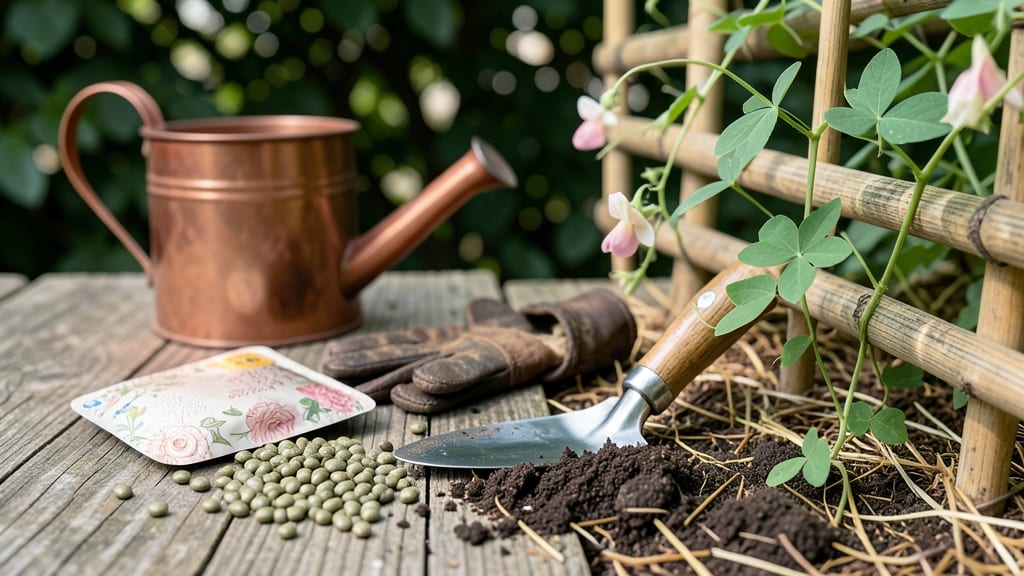
To plant sweet pea flowers 🌸 successfully, start by soaking seeds overnight and sowing them 1 inch deep in well-drained soil—this simple step boosts germination rates and sets your vines up for strong growth.
Sweet peas aren’t just fragrant climbers—they’re the secret weapon of cottage gardens, adding vertical drama and intoxicating scents that last all season. But planting them wrong means weak vines and sparse blooms, which is why timing, soil prep, and trellis support matter more than you might think.
Whether you’re tucking them into a sunny garden bed or starting them indoors for a head start, the right conditions make all the difference.
In Zone 6a, aim for March–April planting, 4–6 weeks before your last frost, to give your sweet peas the long, cool season they crave for climbing and blooming.
Below, I’ll walk you through every step—from soil prep to trellis tricks—so you can grow sweet peas that climb like champions and fill your garden with color from June through August.
When and where to plant sweet peas for maximum blooms
Sweet peas thrive in cool spring weather, but timing matters—plant too early or late, and you’ll miss their 60-90 day bloom window. The key is sowing seeds 4-6 weeks before your last frost, typically in March or early April in most U.S. zones.
This gives vines time to establish roots before summer heat arrives.
For continuous blooms, many gardeners also plant a second crop in late summer (August-September) for fall flowers. However, sweet peas hate summer heat—temperatures above 80°F (27°C) can stunt growth or cause flowers to bolt.
If you live in a hot climate, opt for shade-tolerant varieties like 'Blue Moon' or plant in partial shade.
Northern climates (zones 3-6) should focus on spring planting only, while southern gardeners (zones 7-10) can experiment with fall sowings in September for winter blooms. The goal? Cool roots and warm days—sweet peas need daytime temps of 60-75°F (15-24°C) to flourish.
Soil prep is just as critical as timing. Sweet peas demand well-draining, slightly acidic soil (pH 6.0-7.0). Amend heavy clay with compost or sand, and mix in a balanced fertilizer (5-10-10) at planting. Avoid fresh manure—it can burn tender roots.
| Climate Zone | Best Planting Time | Sunlight Needs | Soil pH | Key Tip |
|---|---|---|---|---|
| Zones 3-6 (North) | March–April (spring only) | Full sun (6+ hours) | 6.0–7.0 | Use row covers for frost protection |
| Zones 7-10 (South) | September–October (fall) or February (early spring) | Partial shade (afternoon) | 6.0–7.0 | Choose heat-tolerant varieties |
| Coastal/Marine | February–March (mild winters) | Full sun to light shade | 6.0–7.0 | Watch for wind damage—use windbreaks |
| Containers/Pots | April–May (after last frost) | Full sun (6+ hours) | 6.0–7.0 | Use deep pots (12"+) with trellis |
Sunlight is non-negotiable for abundant sweet pea blooms. These vines crave 6+ hours of direct sunlight daily, but they’ll tolerate partial shade in hot climates to prevent wilting.
In my Zone 6 garden, I place them near the south-facing fence where they get morning sun and afternoon shade—this trick doubles my bloom count.
If you’re planting in containers, choose pots at least 12 inches deep with drainage holes. Sweet peas have long taproots, so shallow pots stunt growth. Mix in perlite or vermiculite to improve drainage, and place pots where they’ll get consistent afternoon shade in summer.
For maximum fragrance and longevity, avoid planting sweet peas where tomatoes or beans grew last year—they share pests. Instead, rotate them into fresh soil where legumes or grasses thrived previously. This reduces disease risk and boosts nutrient availability.
Pro tip: Soak seeds overnight before planting to speed up germination. Sweet pea seeds have hard outer shells that can take 10-14 days to sprout without pre-treatment. Plant seeds 1 inch deep and 2-3 inches apart—they’ll self-thin as they grow, but overcrowding leads to weak, leggy vines.
After planting, mulch heavily with straw or shredded leaves to retain moisture and suppress weeds. Sweet peas hate competition, so keep the base weed-free until vines reach 6 inches tall. Once established, they’ll climb like crazy—just give them a sturdy trellis!
Trellis setup secrets: how to train sweet pea vines for strong growth
Sweet peas need the right support system to reach their full 6-8 foot potential. Without a sturdy trellis, vines sprawl, leading to tangled growth and fewer blooms. The key is choosing the right structure and training them properly from the start.
I’ve learned that a well-placed trellis doesn’t just support vines—it creates a vertical garden that maximizes space and airflow.
Your trellis options range from DIY wooden frames to pre-made metal arches. Each material has trade-offs: wood blends into landscapes but requires maintenance, while metal lasts longer but can get hot in summer.
Bamboo offers a middle ground with natural aesthetics and durability. The right choice depends on your garden’s style and your willingness to invest time in setup.
| Material | Pros | Cons | Best For |
|---|---|---|---|
| Wood | Natural look, easy to DIY, affordable | Requires staining, can rot over time | Cottage gardens, rustic styles |
| Metal | Long-lasting, sturdy, low maintenance | Can heat up in sun, less aesthetic | Modern gardens, high-traffic areas |
| Bamboo | Lightweight, natural, eco-friendly | May need replacing every 2-3 years | Tropical gardens, temporary setups |
For DIY trellises, I recommend using 2x4 lumber for a simple A-frame design. Space horizontal slats 6 inches apart to give vines room to twine. If you’re buying pre-made, look for arch-shaped trellises—they mimic sweet peas’ natural growth habit and create a stunning focal point.
Install your trellis right after planting so vines have something to grab onto immediately.
Training sweet peas is easier than you think. Start by gently tying vines to the trellis with soft twine or jute twine when they reach 6-8 inches tall. Avoid plastic ties—they can damage tender stems.
I like to use a figure-eight loop method: loop the twine around the vine and the trellis, then cross the ends to secure. This gives vines room to grow without restricting them.
Pruning is just as important as training. Remove any yellowing leaves or dead flowers promptly to redirect energy to new growth. Pinch back the tips of young vines to encourage bushier growth. And here’s a pro tip: Deadhead spent blooms regularly to keep the plant producing flowers all season.
I’ve found that sweet peas respond well to light pruning every 2 weeks—just snip above a leaf node to promote branching.
One common mistake I see is letting vines get too tangled. If you notice crossing stems, gently separate them and retie them to the trellis. Overcrowding leads to fungal diseases and weak growth. Aim for 12-18 inches of space between plants when installing your trellis.
With the right setup and care, your sweet peas will climb like champions, filling your garden with fragrance and color all summer long. 🌸