
Watering
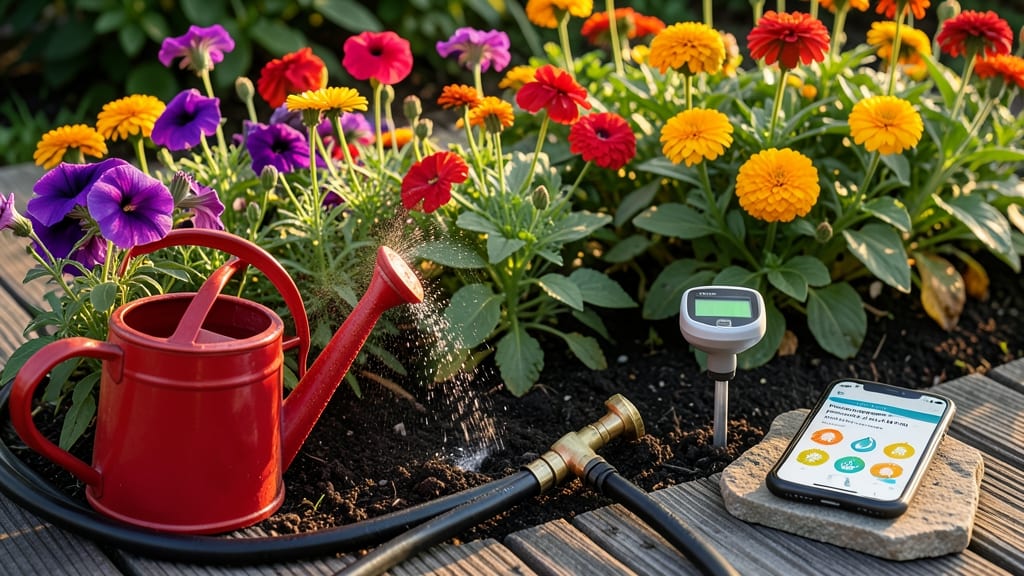
Watering outdoor flowers the right way means knowing how often to water outdoor flowers — too much or too little, and your blooms won’t last the season.
Struggling to keep your outdoor flowers thriving? Overwatering or underwatering can both kill your plants — yet most gardeners guess rather than follow science-backed watering schedules tailored to their climate and flower types.
In this guide, you’ll learn the exact watering intervals for annuals vs. perennials, how soil type and weather change the rules, and the 5 signs you’re watering wrong (and how to fix it).
Whether you’re dealing with drought-tolerant succulents or thirsty roses, we’ll break it down by zone, season, and plant type so your garden stays vibrant all year.
Science-backed watering frequency for different flower types (by root depth & needs)
Watering your outdoor flowers isn't a one-size-fits-all task. The root depth and water needs of each flower type determine how often you should water them. For example, shallow-rooted annuals like marigolds need frequent light watering, while deep-rooted perennials such as lavender thrive with infrequent deep soaks.
Understanding these differences prevents both overwatering and underwatering, both of which can harm your plants.
Annuals typically have shorter lifespans and faster growth, requiring more consistent moisture. In contrast, perennials often develop extensive root systems that store water, making them more drought-tolerant once established.
Even within these categories, succulents and cacti need minimal water, while tropical flowers like hibiscus demand regular hydration. Let's break down the science-backed watering schedules tailored to these differences.
Root depth is the key factor in determining watering frequency. Shallow-rooted plants like pansies and petunias have roots within the top 6 inches of soil, while deep-rooted plants like roses and daylilies can extend 3 feet or more below the surface. Deep watering for deep-rooted plants encourages roots to grow deeper, making them more resilient during dry spells.
Here’s a science-backed watering schedule based on root depth and plant type, tailored to average summer conditions in USDA Zone 6a. Adjust for your local climate and season.
| Flower Type | Root Depth | Watering Frequency (Summer) | Watering Depth | Notes |
|---|---|---|---|---|
| Annuals (e.g., Marigolds, Petunias, Zinnias) | 0-6 inches | Every 1-2 days (light watering) | Top 1-2 inches of soil | Fast-growing; needs frequent moisture |
| Perennials (e.g., Lavender, Coneflowers, Black-Eyed Susans) | 12-36 inches | Every 5-7 days (deep watering) | 12-18 inches of soil | Established roots store water; reduce frequency in winter |
| Succulents & Cacti (e.g., Aloe, Sedum, Echeveria) | 6-12 inches | Every 7-14 days (soak and dry) | Deep soak until water runs out drainage holes | Drought-tolerant; overwatering kills them |
| Tropical Flowers (e.g., Hibiscus, Impatiens, Begonias) | 6-12 inches | Daily (light to moderate) | Top 2-3 inches of soil | Loves humidity; mulch to retain moisture |
| Drought-Tolerant Perennials (e.g., Russian Sage, Yarrow, Catmint) | 18-36 inches | Every 10-14 days (deep watering) | 12-18 inches of soil | Once established, needs very little water |
| Bulbs (e.g., Dahlias, Tulips, Allium) | 6-12 inches | Every 3-5 days (moderate watering) | Top 3-4 inches of soil | Water at base; avoid wetting foliage |
For shallow-rooted annuals, like marigolds and zinnias, focus on light but frequent watering. These plants have rapid growth rates and require moisture to stay vibrant.
Watering in the early morning reduces evaporation and fungal diseases. Use a spray nozzle or drip irrigation to keep the soil consistently moist without oversaturating it.
Deep-rooted perennials, such as lavender and roses, benefit from infrequent deep watering. This encourages their roots to grow deeper, making them more resilient during dry periods. For these plants, water once a week during summer, ensuring the water penetrates at least 12 inches into the soil.
In winter months, reduce watering to once every 2-3 weeks, as many perennials enter dormancy.
If you're growing succulents or cacti, the rule is simple: less is more. These plants store water in their leaves and stems, so they only need water when the soil is completely dry. Water them once every 7-14 days during summer, and even less in winter.
Adjusting your watering schedule by season and climate Zone
Your outdoor flowers don’t need the same amount of water year-round. In summer, heat and wind dry soil 30% faster than in spring, while winter dormancy reduces needs by 50% or more.
Even within the same season, humidity levels and rainfall patterns shift dramatically—like the Mediterranean climate where summer droughts mean watering just once every 10-14 days, while tropical zones may need daily checks. Understanding these shifts saves time, water, and keeps your blooms vibrant.
Climate zones also play a huge role. For example, Zone 5-7 gardens (common in the Midwest) face freezing winters and hot summers, requiring adjustments from bi-weekly watering in winter to daily soaks in July.
Meanwhile, Zone 9-10 (like Southern California) might only need deep watering every 5-7 days year-round due to low humidity and occasional rains. Ignoring these factors leads to root rot or wilting—both preventable with a smart schedule.
Here’s how to fine-tune your watering by season and zone, with actionable steps for your specific setup:
- Spring (Zones 5-7): Water every 2-3 days as soil thaws—morning watering prevents fungal growth from evening moisture.
- Summer (Zones 9-10): Deep water every 5-7 days; mulch retains 30% more moisture in arid climates.
- Fall (All Zones): Reduce to every 5-10 days; focus on root establishment before dormancy.
- Winter (Zones 5-7): Water bi-weekly only if soil is bone-dry—overwatering kills roots in freezing temps.
- Tropical Zones (e.g., Hawaii): Light daily watering; avoid soggy soil to prevent leaf spot diseases.
Seasonal transitions are critical. In early spring, start with shallow watering to wake dormant roots, then gradually increase depth as growth accelerates. By late summer, switch to deep, infrequent watering to encourage drought-resistant roots.
A simple trick: Stick your finger 1 inch into soil—if it’s dry, water; if damp, wait. This soil check beats guessing and adapts to your local weather.
Rainfall also demands flexibility. In Pacific Northwest zones (8-9), where mild winters bring steady rain, you might skip watering entirely for 6-8 weeks in winter. Conversely, Southeastern zones (7-8) face summer downpours followed by droughts, so install a rain gauge to track accumulation.
Aim for 1 inch of water per week (including rain) to meet most flowers’ needs without waste.
Don’t forget mulching—it’s a game-changer. A 3-inch layer of mulch (straw, wood chips, or pine needles) locks in moisture, reducing summer watering by up to 40%. Apply it in early spring after the last frost, keeping it 2 inches away from stems to avoid rot.
For container flowers, use self-watering pots or group plants to create a micro-climate that retains humidity.
Pro tip: Use a watering timer or smartphone app to track schedules. Set reminders for morning watering (before 10 AM) to minimize evaporation and fungal risks. Adjust frequencies every 2 weeks based on weather forecasts—heatwaves or storms can shift your schedule overnight.
With these tweaks, your flowers will thrive year-round, no matter where you garden. 🌸