
Watering
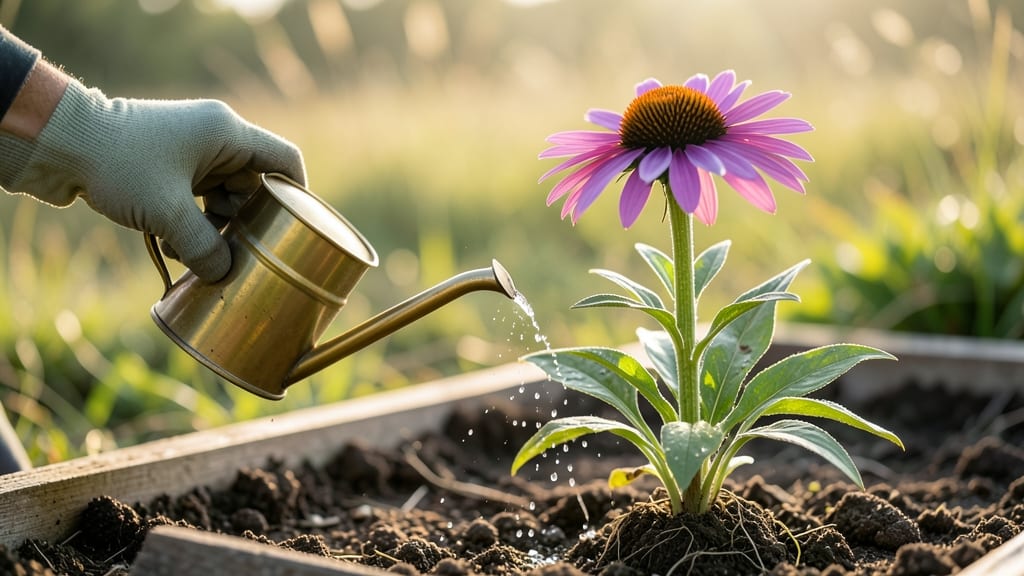
Watering coneflowers the right way keeps those iconic purple blooms thriving year after year—even when you forget to check on them.
Struggling to keep your coneflowers 🌼 thriving despite inconsistent watering? These hardy perennials are famously drought-tolerant—but even they need the right care to produce those iconic purple blooms year after year.
Too much water drowns their roots, while too little stunts growth, but finding that balance is easier than you think. With just a few simple adjustments based on your climate and soil, you can turn watering from a guess into a science.
Below, I’ll break down the exact schedule for seedlings, established plants, and seasonal shifts—plus how to spot trouble before it starts. Your coneflowers will thank you with healthier blooms and fewer wilting surprises.
Coneflower watering schedule by growth stage: exact timing for peak blooms
Mastering the coneflower watering schedule is key to those vibrant purple blooms you adore. While these plants are drought-tolerant, their water needs change dramatically from seedling to mature stages.
I’ve grown coneflowers for years and learned that precise timing—especially during root development and blooming season—makes all the difference in plant health and flower production. Let’s break it down by growth phase so you can water with confidence.
New coneflower seedlings demand the most attention, requiring consistent moisture to establish roots. Overwatering here is just as harmful as underwatering—both can stunt growth. The goal is to keep the soil evenly damp (not soggy) during the first 4-6 weeks after planting.
Once seedlings hit 2 inches tall, you’ll gradually reduce frequency while increasing water depth to encourage deep root penetration.
| Growth Stage | Watering Frequency | Water Amount | Best Time | Key Tips |
|---|---|---|---|---|
| Seedlings (0-6 weeks) | Every 2-3 days | ½ inch per watering | Morning | Keep soil evenly moist, avoid puddles |
| Established (6-12 months) | Weekly (deep soak) | 1-2 inches per week | Early morning | Water at soil level, not foliage |
| Blooming Season (Summer) | Every 10-14 days | 1-1.5 inches total | Morning or evening | Reduce watering if rainfall exceeds 1 inch |
| Post-Bloom (Fall) | Every 3-4 weeks | Light soak (½ inch) | Morning | Encourage root hardening before winter |
| Dormancy (Winter) | Monthly (if no snow) | ¼ inch (bare minimum) | N/A | Avoid wet mulch to prevent rot |
Once your coneflowers reach maturity (typically after their first year), they’ll tolerate drought-like conditions far better than most perennials. During peak blooming season (summer), I cut back to watering every 10-14 days unless we experience a prolonged dry spell.
The key is deep watering—soaking the roots to 12-18 inches deep—rather than frequent shallow watering. This mimics natural rainfall and strengthens their drought resistance.
Seasonal adjustments are critical. In spring, when new growth emerges, maintain consistent moisture to support foliage development. By late summer, as temperatures rise, reduce frequency to prevent root rot while still providing enough water for flower production.
I’ve found that morning watering is ideal—it allows foliage to dry quickly, reducing fungal risks like powdery mildew, which can devastate blooms.
After the first frost, coneflowers enter dormancy, and their water needs drop dramatically. At this stage, I switch to a maintenance-only approach: just enough to prevent the soil from becoming completely dry.
Overwatering in winter can lead to rot and weak regrowth next spring. A 2-3 inch layer of mulch helps regulate soil moisture and protects roots from freeze-thaw cycles.
One common mistake I see is watering coneflowers at night. Wet foliage overnight creates the perfect environment for fungal diseases. Always water in the early morning so leaves have all day to dry.
Another pro tip: use a soaker hose or drip irrigation to deliver water directly to the root zone without wetting the leaves. This method saves water and keeps your plants healthier.
To check if your coneflowers need water, stick your finger
Signs of overwatering vs underwatering coneflowers: what to watch for
Coneflowers (Echinacea) are tough, but even they show clear signs when their water needs aren't met. Yellowing leaves or mushy stems often signal overwatering, while dry, crispy foliage or drooping blooms point to underwatering. Learning these cues helps you adjust care before stress becomes permanent.
First, check the soil moisture by sticking your finger 1-2 inches deep. If it feels soggy, you're likely overwatering. For underwatering, the soil will be bone-dry. Root rot from excess water is silent but deadly—it starts with wilting despite wet soil.
Overwatering vs Underwatering: Quick Fixes
- Yellow leaves
- Mushy stems
- Foul soil smell
- Dry, crispy edges
- Wilting despite dry soil
- Dull, drooping blooms
For overwatered coneflowers, reduce frequency immediately and amend soil with perlite or sand to improve drainage. Raise plant beds if your garden retains too much moisture. Overwatering also attracts pests like slugs, so keep an eye out for slimy trails at night.
When underwatering occurs, water deeply until moisture reaches 6-8 inches down. Use a soaker hose to avoid surface evaporation. Mulch with straw or wood chips to lock in moisture—this mimics their native prairie habitat where rainfall is sporadic but deep.
Pay attention to bloom color intensity too. Vibrant purple petals mean balanced watering, while pale or brown edges signal stress. Adjust your schedule based on seasonal needs—coneflowers need more water in summer heat but less in cool fall months.
If you're unsure, use the "finger test" daily during extreme weather. Coneflowers are resilient, but catching water stress early ensures those iconic daisy-like blooms return year after year. 🌼