
Companion Plants
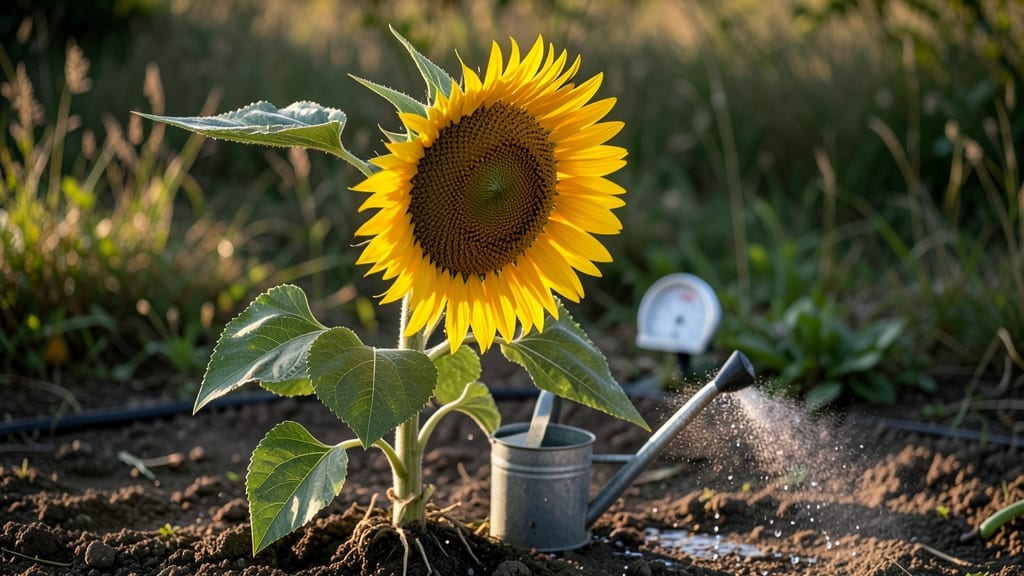
To water a sunflower plant correctly, aim for deep soaks every 2-3 days once established, but the real secret lies in reading the soil—not the calendar.
Picture this: your 🌻 sunflower seedlings wilt by noon, or worse, their stems rot from soggy soil. Both mistakes happen when you guess instead of check. The fix? A simple finger test in the soil that tells you exactly when to water—and when to hold back.
Sunflowers in Zone 6a need more frequent watering in April-May when they’re sprouting, but once they hit 6 feet tall, they’ll drink deeply but less often. I’ll walk you through the stage-by-stage schedule, plus how to spot the subtle signs of over- or under-watering before it’s too late.
By the end, you’ll know not just how often to water, but how much and when—so your sunflowers grow tall, strong, and ready for harvest by July-September.
The deep-soil check method: how often to water sunflowers by stage
Sunflowers aren't just drought-tolerant—they thrive with consistency. The key lies in understanding their three distinct growth stages, each with unique water needs. Unlike many plants, sunflowers develop deep taproots, meaning they need deep, infrequent watering rather than frequent shallow drinks.
I’ve learned this the hard way—overwatering my first batch led to root rot and stunted growth, while underwatering caused my second batch to wilt before flowering.
Here’s the secret: Check soil moisture 2-3 inches deep before watering. This deep-soil check method ensures your sunflowers develop strong roots while avoiding waterlogged soil. The frequency changes dramatically from seedling stage to full bloom, and climate plays a huge role.
Let’s break it down by stage, so you can water with confidence and watch those 12-foot giants reach their potential.
🌱 Visual Guide: Soil Moisture Check
| Growth Stage | Water Frequency | Soil Moisture Test | Water Amount |
|---|---|---|---|
| Seedling (0-3 weeks) | Every 1-2 days | Top 1 inch dry | ½ inch per watering |
| Vegetative (3-6 weeks) | Every 2-3 days | Top 2 inches dry | 1 inch per watering |
| Budding (6-10 weeks) | Every 3-4 days | Top 3 inches dry | 1.5 inches per watering |
| Flowering (10+ weeks) | Every 4-7 days | Top 4 inches dry | 2 inches per watering |
During the seedling stage, sunflowers need frequent, light watering to encourage root development. I use a spray bottle for young seedlings to avoid disturbing their delicate stems. Once they reach 3 inches tall, switch to a watering can with a gentle stream.
The goal is to keep the soil consistently moist but never soggy—this is when most beginners make mistakes.
As sunflowers enter the vegetative stage (weeks 3-6), their water needs shift. This is when their taproots deepen rapidly, so deeper watering becomes critical. I test soil moisture by sticking my finger 2 inches deep—if it feels dry, it’s time to water.
In hot climates, you may need to water every 2 days, while cooler regions can stretch it to 3 days. Always water at the base of the plant to avoid wetting leaves, which reduces fungal risks.
When buds form (weeks 6-10), your sunflowers are hungry for water but also more resilient. At this point, I increase the depth of watering to 1.5 inches per session. The key is to water deeply but infrequently.
If you’re growing sunflowers in containers, they’ll dry out faster—check soil moisture daily in extreme heat. Mulching with straw or wood chips helps retain moisture and keeps roots cool.
Finally, during the flowering stage (10+ weeks), sunflowers become surprisingly drought-tolerant. Their deep roots can access water from lower soil layers, so you can reduce frequency to every 4-7 days. However, don’t skip watering entirely—consistent moisture ensures those vibrant blooms stay healthy.
I’ve seen sunflowers wilt dramatically after one dry week, but they bounce back quickly with a deep drink. This stage is also when container-grown sunflowers need extra attention—they dry out 2-3x faster than in-ground plants.
Climate plays a huge role in adjusting your watering schedule. In arid regions, like the Southwest U.S., sunflowers may need daily watering during summer, while in humid climates, like the Pacific Northwest, you might only water every 5-7 days.
Always adjust based on rainfall—if you’ve had 1 inch of rain in a week, skip your watering day. And remember: morning watering is best to reduce evaporation and fungal risks.
One common mistake I see is watering based on a schedule rather than soil conditions. Sunflowers in sandy soil dry out faster than those in clay soil, so always perform the deep-soil check.
If the soil feels damp 3 inches down, wait another day. Overwatering is just as damaging as underwatering—it leads to root rot and stunted growth. For container sunflowers, I’ve found that self-watering
5 Signs you’re overwatering (or underwatering) your sunflowers—and how to fix it
Your sunflowers might look thirsty, but giving them too much—or too little—water can stunt their growth or even kill them. Overwatering drowns roots, while underwatering stresses plants, both leading to visible symptoms like yellowing leaves or wilting.
Let’s decode these warning signs so you can adjust your watering routine before it’s too late.
First, check your soil moisture—sunflowers prefer deep but infrequent watering. If the top 2-3 inches feel damp, hold off. If it’s bone-dry, it’s time to water. The key is balance: sunflowers are drought-tolerant once established, but seedlings need consistent moisture to avoid stress.
🌱 How Often Should You Water a Sunflower Plant?
- Seedlings (first 2 weeks): Water every 1-2 days—keep soil consistently moist but not soggy.
- Vegetative Stage (2-6 weeks): Water every 2-3 days, soaking soil 6-8 inches deep.
- Budding/Flowering (6+ weeks): Reduce to every 3-4 days—mature plants store water better.
- Potted Sunflowers: Water daily in summer—containers dry out 3x faster than ground soil.
- Drought Conditions: Water deeply every 5-7 days—sunflowers prioritize root growth over leaves.
Watch for yellowing leaves, a classic sign of overwatering. If the lower leaves turn yellow while the upper ones stay green, your sunflowers are drowning. Root rot often follows, and once it sets in, recovery is nearly impossible.
To fix it, let the soil dry out completely between waterings and improve drainage by adding compost or perlite.
On the flip side, wilting or crispy leaves signal underwatering. Unlike overwatering, this stress causes leaves to curl or feel dry to the touch.
If you see this, water deeply until it runs out the drainage holes (for pots) or seeps into the soil (for in-ground plants). Morning watering is best—it gives leaves time to dry before evening, reducing fungal risks.
Another red flag? Cracked or hardened soil around the base. This means the soil has shrunk from extreme dryness, and your sunflower’s roots are scrambling for moisture.
Break up the soil gently with your fingers and water slowly to rehydrate without shocking the roots. Mulching with straw or wood chips helps retain moisture and prevents this issue long-term.
Don’t ignore drooping stems either—this is your sunflower’s SOS signal. While wilting can mean underwatering, it can also happen if the plant is overwatered and roots suffocate.
Stick your finger in the soil: if it’s soggy, pull back on watering. If it’s dry, give it a thorough drink. Consistency is key—sunflowers hate moisture swings.
Remember, sunflowers are resilient! With the right watering routine—deep, infrequent soaks—they’ll reward you with towering stems and vibrant blooms. Adjust based on the signs, and soon your sunflowers will be thriving, not just surviving. 🌻