
Planting
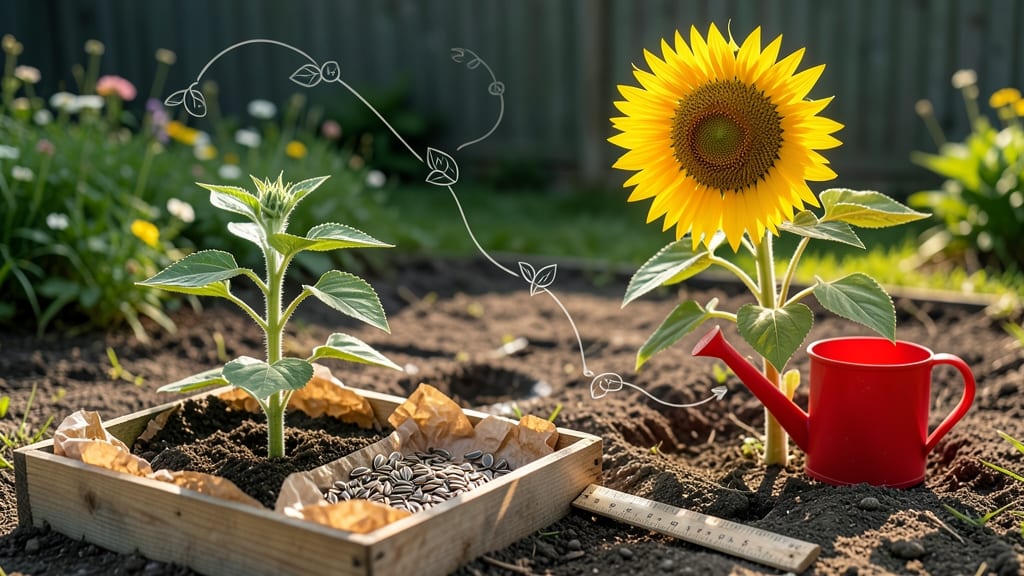
Growing a sunflower from seed to that 12-foot tower of sunshine takes between 80 and 120 days, depending on variety, care, and climate—but the real magic happens in the first two weeks.
Picture this: you tuck a seed into warm soil, barely an inch deep, and within days, a tiny green hook breaks through. That first sprout is just the beginning—what follows is a rapid climb toward the sky, with milestones like true leaves, a sturdy stem, and finally, that iconic bloom.
Most gardeners assume sunflowers grow at a steady pace, but soil temperature, sunlight, and even seed quality can shift the timeline by weeks. A cool spring might delay germination, while rich soil and full sun can have your 🌻 reaching maturity faster than expected.
In this guide, I’ll break down the exact stages of growth, the factors that speed things up (or slow them down), and the three key steps to ensure your sunflowers hit their full height in record time.
Sunflower growth timeline: key stages from seed to bloom
Sunflowers are nature’s speedy performers, but their growth timeline from seed to 12-foot giant depends on more than just time. Most varieties take 80-120 days to bloom, but factors like soil warmth, sunlight exposure, and seed variety can shift this window by weeks.
Understanding each growth stage helps you set realistic expectations and troubleshoot delays before they become problems.
Let’s break down the journey from that first green shoot poking through the soil to the day your sunflower stands taller than you.
Each phase has distinct milestones, and knowing what to expect at each 7-10 day interval ensures you’re ready to support your plant’s needs—whether that’s thinning seedlings, staking tall varieties, or protecting blooms from pests.
⚠️ Pro Tip: Keep a garden journal to track your sunflower’s progress. Note the day you plant, when sprouts appear, and how long each stage takes. This becomes your personalized growth timeline for future seasons!
| Stage | Days to Complete | Key Milestones | Critical Care Tasks |
|---|---|---|---|
| Germination | 5-14 days | First green cotyledons appear | Keep soil moist (60-70°F) |
| Vegetative (Leaf Growth) | 21-42 days | Stem elongates; true leaves form | Thin to 12" spacing; fertilize lightly |
| Bud Formation | 14-28 days | Bud visible; stem hardens | Stake if >5 ft tall; reduce watering |
| Flowering | 7-14 days | Bloom opens fully; attracts pollinators | Harvest seeds when back turns brown |
| Seed Maturity | 14-21 days | Seeds dry; stem dies back | Cut heads; dry for storage |
🌱 Total Growth Cycle: 80-120 days (varies by variety)
The first stage, germination, is where patience pays off. Sunflower seeds need consistent moisture and warm soil (60-70°F) to sprout. In ideal conditions, you’ll see those first cotyledons (seed leaves) in just 5-7 days.
However, if your soil stays cold (<50°F), germination can drag out to 2-3 weeks. This is why many gardeners start seeds indoors 4-6 weeks before the last frost date.
Once sprouted, your sunflower enters the vegetative stage, where it focuses on leaf and stem growth. During these 3-6 weeks, you’ll notice rapid elongation—some varieties grow 2-3 inches per day!
This is when thinning seedlings becomes critical. Leave the strongest 12-18 inches apart (closer for dwarf varieties) to prevent competition. If you’re growing tall sunflowers (8-15 ft), consider staking early to avoid flopping.
Around 4-6 weeks after planting, your sunflower will shift into bud formation. You’ll spot a hardened stem and a visible bud at the top. This phase lasts 2-4 weeks, and proper care here determines whether your bloom will be vibrant or stunted.
Reduce watering slightly to encourage root strength, and watch for aphid infestations—a common issue during this stage. Neem oil spray can save your bud if pests appear.
The flowering stage is the crowning achievement, typically arriving 8-12 weeks after planting. When that golden bloom finally opens, it’s a sight to behold—but don’t celebrate too early! The first 24-48 hours are crucial for pollination.
Bees and other pollinators need easy access, so avoid heavy pesticides during this window. If you’re growing sunflowers for seed production, hand-pollinate by transferring pollen with a paintbrush if your area lacks pollinators.
After flowering, the seed maturity stage begins. It takes 2-3 more weeks
Factors that speed up or slow down sunflower growth
Sunflowers are nature's speed demons when conditions are perfect—but even a small misstep can turn your 120-day dream into a 3-month slog.
The difference between a 10-foot giant blooming in 80 days and a stunted 3-foot plant struggling at 120 days often comes down to these four critical factors: soil quality, watering habits, sunlight exposure, and seed variety.
Let's dig into what makes or breaks your sunflower's growth timeline.
First, your soil temperature and nutrient levels can shave weeks off germination time. Sunflower seeds need soil that's at least 60°F (15°C) to sprout consistently. If your soil is cooler, germination could take 10-14 days longer than the standard 7-10 days.
Amending with compost or aged manure at planting gives your seedlings a 20% faster start by providing essential phosphorus and potassium right when they need it most.
Here’s how these factors directly impact your sunflower’s growth speed—what to do (and avoid) for the fastest, healthiest plants possible:
Sunflower Growth Speed Factors
✅ Speed Up Growth
- Full sun (6-8 hrs/day): Cuts growth time by 20%
- Warm soil (60°F+): Germinates seeds in 7-10 days
- Well-draining soil: Prevents rot, keeps roots active
- Dwarf varieties: Bloom in 50-70 days vs. 120+
- Morning watering: Reduces fungal risk
❌ Slow Down Growth
- Cool soil (<55°F): Delays germination by 10-14 days
- Overcrowding: Stunts height by 30-50%
- Night watering: Encourages mildew and rot
- Poor drainage: Roots suffocate, growth halts
- Shade exposure: Extends time to bloom by 3+ weeks
Your watering habits might surprise you—overwatering is just as damaging as underwatering. Sunflowers need 1-2 gallons of water every 3-5 days, but soggy soil triggers root rot, which can stall growth for weeks.
I’ve seen plants recover from drought better than from overwatering. Water deeply in the morning to let foliage dry before nightfall, reducing fungal risks that slow down photosynthesis.
Don’t overlook the power of sunlight exposure. Sunflowers are heliotropic, meaning they follow the sun’s movement. Planting them in a spot with 6+ hours of direct sunlight ensures they grow 20% faster than those in partial shade.
If your garden gets less sun, choose dwarf varieties like 'Teddy Bear' or 'Moulin Rouge,' which bloom in 50-70 days instead of the standard 80-120 days. Even a few hours less sunlight can delay flowering by 2-3 weeks.
Finally, your seed variety is the wildcard. Giant varieties like 'Russian Giant' or 'Mammoth' take 120-140 days to mature, while dwarf sunflowers like 'Sunspot' or 'Little Becka' bloom in as few as 50 days.
If you’re short on time, opt for early-maturing varieties—they’re just as stunning and perfect for container gardening or small spaces. Pro tip: Check the seed packet for days to maturity and plant accordingly.
By mastering these four factors, you’ll turn your sunflower seeds into golden giants in record time—no magic required, just smart gardening. 🌻