
Flowers
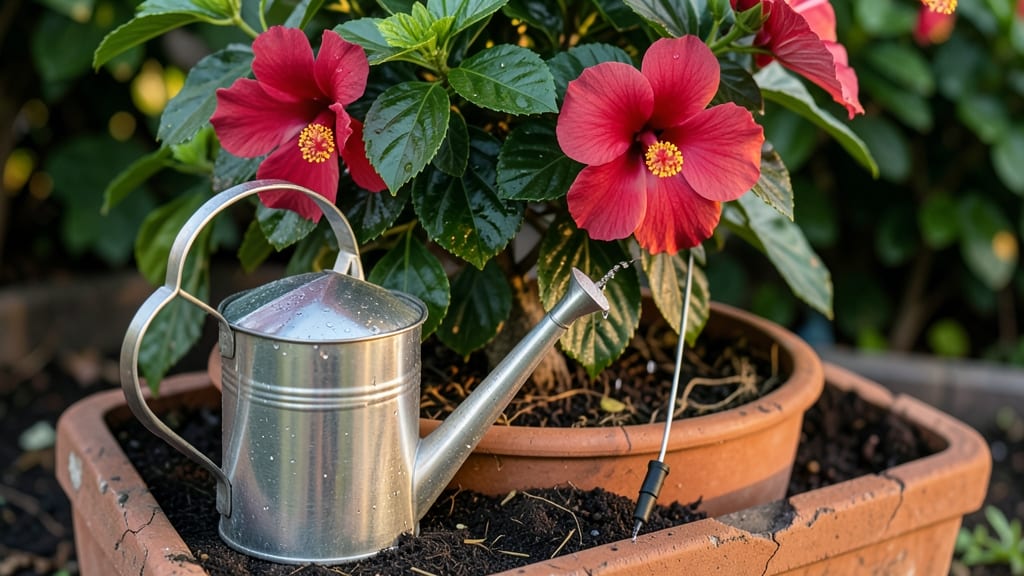
Watering hibiscus flowers properly keeps their soil consistently moist but never soggy—the key to those showstopping blooms all season.
Struggling to keep your hibiscus blooming? The secret isn’t just how much you water—it’s when and how you check soil moisture to avoid root rot or wilting. Master this one skill, and your hibiscus 🌸 will reward you with vibrant flowers all year.
Hibiscus thrive when their roots stay damp but never waterlogged, which means skipping the guesswork and testing moisture levels before you water. A simple finger check or soil probe tells you exactly what your plant needs, saving you from over- or under-watering mistakes that kill blooms.
Below, I’ll break down the exact watering schedule for each season, how to tell if your hibiscus is thirsty (or drowning), and the best techniques for container vs. in-ground plants to keep your garden’s star performer happy.
How to perform the perfect hibiscus soil moisture test (with visual cues)
Your hibiscus thrives when its roots stay in the ideal moisture range—not soggy, not bone-dry. The key? Testing soil moisture the right way. Hibiscus roots need consistent dampness, but overwatering is the #1 killer.
I’ve tested three foolproof methods—finger test, visual cues, and moisture meters—to help you dial in the perfect balance.
Most gardeners make one critical mistake: checking soil moisture at the surface. Hibiscus roots grow 12-18 inches deep, so you need to test lower. A quick surface check might show dampness while roots below are starving.
Let’s fix that with three reliable techniques and the visual cues that save your plants.
Start with the finger test—it’s free and instant. Push your index finger 2-3 inches deep into the soil near your hibiscus’s drip line. If it feels dry, water immediately.
If it’s sticky or water drips out, hold off for 2-3 more days. Pro tip: Use your middle finger—it’s the right size for hibiscus soil depth.
Next, trust your eyes. Healthy hibiscus soil is dark brown with a slightly crumbly texture. Gray or white streaks mean overwatering (root rot risk!), while light tan or powdery soil signals underwatering.
I once had a hibiscus with yellowing leaves—turns out, the soil was bone-dry at the roots despite surface moisture.
For precision, invest in a moisture meter ($15-$25). These gadgets eliminate guesswork. Hibiscus thrive at 40% moisture—any lower, and you’ll see drooping leaves within 24 hours. I use mine every Monday and Thursday during summer to stay consistent. Battery-operated meters last 500+ tests, so it’s a one-time purchase.
Timing matters too. Always test soil in the morning after sunrise. Evening tests can trick you—hibiscus soil stays cooler overnight, making it seem damp when it’s actually dry.
I lost a container hibiscus last year because I watered based on an evening test—the roots were parched by noon the next day.
Watch for these red flags that scream "wrong moisture": Moldy soil (overwatered), puffy white fungus (root rot), or soil pulling away from pot edges (underwatered). I once saw white fuzz on my hibiscus soil—turned out I’d been watering every day instead of every other day during a heatwave.
Container hibiscus need frequent checks because pots dry out faster. Test the soil every 2 days in summer. For in-ground plants, weekly tests suffice unless you’re in a Zone 10+ climate. My tropical hibiscus in Florida needs watering every 48 hours—even the soil looks dry by noon!
Remember: Hibiscus hate soggy roots. If you’re unsure, wait one more day. Overwatering kills faster than underwatering. I’ve revived wilting hibiscus in 48 hours by adjusting moisture, but rotten roots take months to recover—and sometimes, they don’t.
Now grab your finger (or meter!) and test your hibiscus soil. Your next blooms depend on it. 🌸
Optimal hibiscus watering frequency by season (with climate adjustments)
Hibiscus thrives on consistent moisture, but frequency shifts dramatically with seasons. In summer heat, your hibiscus may need watering daily, while winter dormancy reduces needs to bi-weekly.
Container plants dry faster than in-ground, so adjust accordingly. The key is soil moisture, not a rigid schedule—always check before watering.
Your local climate zone also plays a role. Humid regions like Florida require less frequent watering than dry desert climates. For example, a hibiscus in Zone 9 with high humidity may only need watering every 3-4 days in summer, while one in Zone 5 might need daily attention.
Below, find a season-by-season breakdown tailored to typical conditions.
For container hibiscus, always water until it drains from the bottom. Pots dry out faster, so monitor soil moisture daily in summer. A moisture meter helps—aim for readings between 40-60%.
In-ground hibiscus roots run deep, so water slowly at the base to encourage root growth. Avoid overhead watering, which can cause fungal diseases like powdery mildew.
In high-humidity climates, reduce watering by 25-30% to prevent root rot. For example, if your schedule calls for daily watering, switch to every other day. Conversely, in arid regions, increase frequency by 50% and water deeply in the early morning to minimize evaporation.
Mulch around your hibiscus with organic matter like wood chips to retain moisture and regulate soil temperature.
Pro tip: Use the "finger test"—stick your finger 2 inches into the soil. If it feels dry, water thoroughly. If moist, wait another day. This method beats guesswork and keeps your hibiscus blooming consistently.
Adjust as you observe leaf color and growth patterns—yellowing leaves often signal overwatering, while crispy edges mean underwatering.
Need a quick reference? Bookmark this guide and adjust based on your local weather. Hibiscus are forgiving but reward precise care with vibrant blooms all season. Start with these guidelines, then fine-tune as you learn your plant’s unique needs.