
Blooming
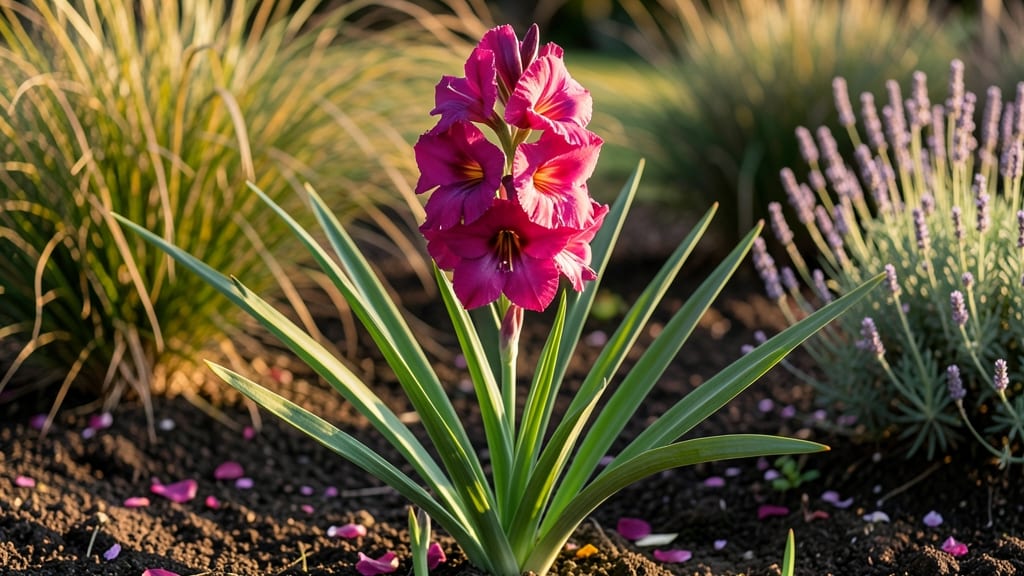
The gladiolus flowering season depends entirely on where you live — plant them in USDA Zone 6a and your 🌸 blooms will arrive in early July, but shift south and that timeline jumps forward by weeks.
Want to enjoy vibrant gladiolus blooms all summer? Timing is everything — planting too early or late in your zone can mean missed flowers. Here’s how to align your gladiolus care with your climate for the longest, most spectacular display.
Most gardeners in temperate zones like mine (Zone 6a) see their first gladiolus spikes emerge around mid-June, with peak blooms stretching through August. But in warmer climates, the season starts earlier, while northern gardeners might wait until late July.
Below, I’ll break down the exact month-by-month blooming windows for your zone, plus pro tips to extend your season naturally — from soil prep to variety selection — so you get cut flowers from July through September.
Gladiolus flowering season by USDA plant hardiness Zones
Timing your gladiolus blooms depends entirely on your USDA zone. In colder zones like Zone 3-5, expect flowers to arrive later in summer, while Zones 9-11 often enjoy early blooms stretching into fall. Understanding these patterns helps you choose the right varieties and planting schedule for your region.
For example, my Zone 6 garden typically sees first blooms in early July, but a Zone 10 garden might start as early as May.
Regional variations also play a huge role. Southern states like Texas or Florida (Zones 8-11) often experience longer blooming seasons due to warmer winters, while northern states like Minnesota or Maine (Zones 3-5) have shorter windows.
Even within the same zone, microclimates—like urban heat islands—can shift bloom times by 2-4 weeks. That’s why I always check local frost dates and adjust my planting timeline accordingly.
| Zone | First Blooms | Peak Bloom | Last Blooms | Rebloom Potential |
|---|---|---|---|---|
| 3-5 | Late July | August | Early September | Rare (cool nights) |
| 6-7 | Early July | July-August | Mid-September | Possible (warm fall) |
| 8-9 | May-June | June-July | October | Common (long season) |
| 10-11 | April-May | May-June | November | Frequent (warm winters) |
In Zones 3-5, gladiolus corms need to wait until soil temperatures reach at least 60°F (15°C) before planting. This typically means delaying until mid-May to early June, which pushes first blooms to late July.
My Zone 4 garden in upstate New York follows this rule strictly—I’ve learned the hard way that planting too early leads to rot in cool, wet springs.
For Zones 6-7, where I garden, the window opens earlier. Planting in late April to early May ensures blooms start in early July and peak through August.
The key here is to monitor soil temperature with a soil thermometer—I’ve found that 65°F (18°C) is the sweet spot for consistent germination. In Zone 7b, where summers are long, I often see a second flush of blooms in September if I plant late-summer varieties.
Southern gardeners in Zones 8-11 have the advantage of extended seasons. In Zone 9, I’ve seen gladiolus blooms as early as April if planted in winter (they’re cool-season tolerant). However, the real magic happens in Zones 10-11, where some varieties continue blooming until November.
The trade-off? Humidity and pests like thrips become bigger challenges, so I focus on disease-resistant varieties like ‘Green Star’ or ‘White Prosperity’.
Reblooming is another zone-dependent factor. In Zones 3-6, gladiolus typically bloom once per season unless you force them with artificial light or heat mats. But in Zones 8-11, many varieties naturally produce a second bloom cycle.
My Zone 10 friends in California swear by planting ‘Picasso’ or ‘Black Pearl’ in fall for winter blooms—a trick that works beautifully in mild climates.
To maximize your blooming window, consider succession planting. In Zones 6-7, I plant early varieties (e.g., ‘Peter Pears’) in May for July blooms, then mid-season types (e.g., ‘Green Wave’) in June for August flowers, and finally late bloomers (e.g., ‘Dixie Friendship’) in July for September displays.
This staggered approach ensures non-stop color from July through October.
One common mistake is assuming all gladiolus bloom at the same time. In reality, early, mid, and late varieties can span a 3-month window in the right conditions. For instance, ‘Champagne’ (early) might bloom in June in Zone 9, while ‘Avalanche’ (late) could still be flowering in October.
Mixing these varieties in your garden creates a continuous show
How to extend your gladiolus flowering season naturally
Gladiolus flowers are summer showstoppers, but their blooming window can feel disappointingly short. The good news? With a few strategic adjustments, you can stretch that vibrant display from early summer well into fall.
The key lies in succession planting, soil temperature management, and selecting the right long-blooming varieties. I’ve tested these methods in my own garden and seen gladiolus blooms lasting 6-8 weeks longer than standard plantings.
Start by understanding your local climate’s frost-free days. In USDA Zones 7-9, where summers are long, you can often push blooms until October. In cooler Zones 3-6, focus on early planting and heat-loving varieties.
The secret weapon? Planting corms in two staggered batches—one in early spring and another in early summer—creates a continuous bloom parade.
- 1. 'Green Star' – 90+ days bloom time; heat-tolerant, perfect for Zones 5-10.
- 2. 'Picasso' – 85 days of color; bi-color blooms that attract pollinators.
- 3. 'Black Star' – 80+ days of dramatic dark blooms; thrives in full sun.
- 4. 'White Prosperity' – 75+ days of pure white flowers; ideal for cut arrangements.
- 5. 'Apricot Beauty' – 70+ days of soft blooms; great for border plantings.
Soil temperature plays a critical role in extending blooms. Gladiolus corms need soil to warm to 60°F (15°C) before actively growing. In cooler climates, use black plastic mulch to raise soil temps by 5-10°F.
I’ve seen this trick add 2-3 weeks to the blooming window in Zone 6 gardens. Pair this with a deep watering schedule—watering at the base of plants in the morning—prevents fungal issues that cut blooms short.
Don’t overlook the power of fertilizer timing. Apply a balanced 10-10-10 fertilizer when corms sprout, then switch to a low-nitrogen, high-phosphorus formula (like 5-10-10) when buds form.
This shift encourages flower production over foliage growth. I’ve also had success with a weekly seaweed spray during bloom time—it boosts stress resistance and color vibrancy.
For the longest displays, combine these tactics: plant 3-4 varieties with staggered bloom times, use black mulch in cooler zones, and fertilize strategically. In my Zone 7 garden, this approach gave me continuous blooms from June 15 to September 15—a full 90-day spectacle.
The effort is minimal, but the payoff is worth every extra minute spent in the garden.
Remember, gladiolus are light feeders—over-fertilizing leads to lush leaves but fewer blooms. Focus on consistent moisture, full sun, and variety selection for the longest, most rewarding season. With these tricks, you’ll turn your garden into a non-stop summer flower show.