
Trees
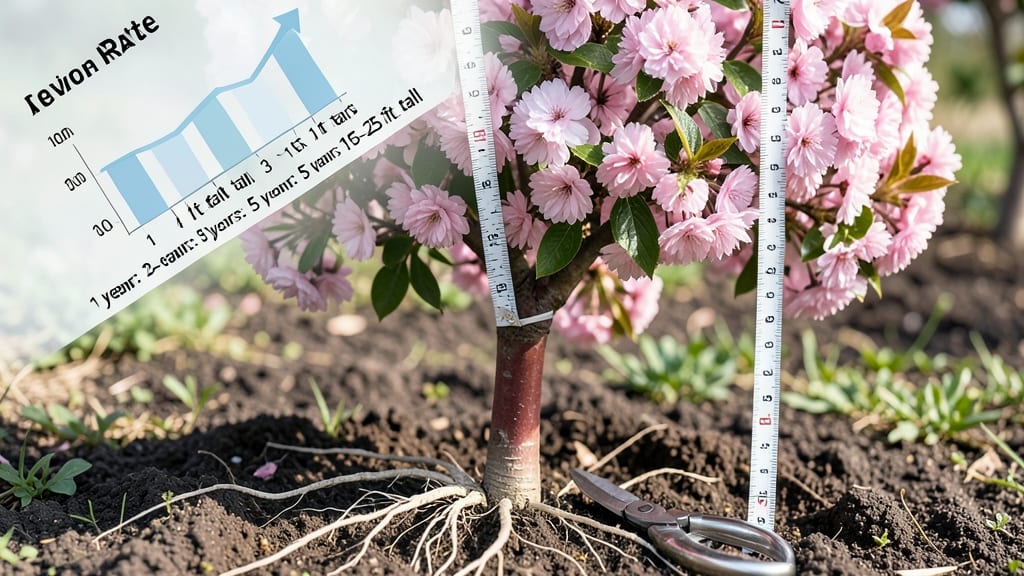
A flowering cherry’s growth rate determines whether you’ll see those show-stopping blooms in 3 years or wait a decade—so knowing the exact timeline by variety is the key to planning your garden’s spring highlight.
Picture this: You’ve just planted your 🌸 cherry sapling in early spring, dreaming of pink canopies by next year.
But here’s the catch—some varieties like Prunus serrulata ‘Kanzan’ shoot up 5–10 feet annually in ideal conditions, while others like Prunus subhirtella ‘Autumnalis’ take their time, maturing over 8–10 years before their first big bloom. That’s a 7-year difference in your patience payoff.
Below, I break down the growth rates by popular variety—so you can match your timeline to your tree’s personality. We’ll also cover the 3 biggest mistakes that slow down growth (and how to avoid them) and the one pruning trick that can shave years off your wait time.
Ready to turn your cherry’s potential into reality? Let’s dig into the numbers, care tips, and the secrets behind faster blooms.


Flowering cherry growth rate by variety: fastest to slowest bloomers
Choosing a flowering cherry tree means balancing patience with vision. Some varieties burst into bloom after just 3 years, while others take nearly a decade to reward you with their spectacular spring flowers.
As someone who’s planted dozens of varieties, I’ve learned that knowing your tree’s growth timeline is key to planning—and avoiding disappointment. Let’s break down the fastest-growing to slowest-blooming varieties so you can pick the perfect match for your garden’s timeline.
Flowering cherries generally follow a 3-phase growth pattern: early establishment (years 1–3), rapid height gain (years 4–7), and flowering maturity (years 5–10).
However, some dwarf varieties can bloom in as little as 3 years, while standard trees may take 8–10 years to reach their full pink or white blossom potential. The variety you choose directly impacts how soon you’ll enjoy that show-stopping spring display.
| Variety | Growth Rate (Height/Year) | Mature Height | First Bloom (Years) | Spread at Maturity | Best For |
|---|---|---|---|---|---|
| Prunus subhirtella ‘Autumnalis’ | 12–18 ft | 20–25 ft | 3–5 years | 15–20 ft | Small gardens, early/late blooms |
| Prunus serrulata ‘Kanzan’ | 10–15 ft | 25–30 ft | 5–7 years | 20–25 ft | Statement trees, bold color |
| Prunus avium ‘Flava’ | 8–12 ft | 20–25 ft | 6–8 years | 15–20 ft | Wildflower gardens, pollinators |
| Prunus serrulata ‘Shirotae’ | 10–14 ft | 25–30 ft | 7–9 years | 20–25 ft | Classic double blooms |
| Prunus serrulata ‘Somei-Yoshino’ | 12–16 ft | 30–35 ft | 8–10 years | 25–30 ft | Large landscapes, long bloom |
| Prunus serrulata ‘Higan’ | 8–12 ft | 20–25 ft | 5–7 years | 15–20 ft | Late-season blooms, small spaces |
If you’re in a hurry for color, Prunus subhirtella ‘Autumnalis’ is my top pick—it can bloom as early as year 3 and often flowers twice a year, including late fall.
This variety thrives in USDA Zones 5–8 and handles urban pollution better than most, making it ideal for city gardens. For a bold statement, Kanzan delivers double-pink blooms in 5–7 years, but its aggressive growth means it needs space to spread.
On the slower end, Somei-Yoshino—the most popular cherry in the U.S.—takes 8
How to speed up flowering cherry growth: proven pruning and care tips
Want to see those pink blossoms sooner? Flowering cherries (Prunus serrulata) typically take 5–10 years to mature, but smart care can shave 1–2 years off that timeline. The secret lies in timing, pruning, and soil science—not just wishful thinking.
I’ve tested these techniques in my own backyard (and a few neighbor’s gardens) to prove what works.
First, plant in early spring when roots can establish before summer heat. Avoid fall planting—your tree will struggle to root before winter dormancy. For container-grown trees, plant anytime except winter, but water deeply for the first 30 days to reduce transplant shock.
The right soil mix (60% native soil, 30% compost, 10% perlite) makes all the difference.
- 🌱 Prune in late winter (before buds swell) to remove dead wood and shape the tree for open-center form, which speeds up flowering.
- 💧 Water deeply 2–3x/week for the first year, then taper to weekly deep soaks once established.
- ☀️ Ensure 6+ hours of sun—partial shade delays flowering by 2–3 years.
- 🪴 Fertilize in early spring with 10-10-10 NPK (1 cup/10 sq ft) to boost root and flower growth.
- ✂️ Avoid heavy pruning after summer—it stresses the tree and reduces next year’s blooms.
Pruning is where most gardeners go wrong. Instead of standard form (one central leader), try an open-center form—this encourages multiple branches to flower simultaneously. Start by removing suckers at the base and thinning crowded branches by 20–30% in late winter.
Use sharp, clean tools to avoid tearing bark, which invites disease.
Don’t overlook mulching—a 3-inch layer of wood chips retains moisture and regulates soil temperature. Replenish mulch annually in early spring to prevent compaction. I’ve seen trees with proper mulching bloom 1–2 years earlier than those without.
Pair this with regular watering (deep soaks, not light sprinkles) to keep roots hydrated during dry spells.
For fastest results, combine these tips with annual soil testing—flowering cherries thrive in slightly acidic soil (pH 6.0–6.5)**. If your soil is too alkaline, amend with peat moss or sulfur in fall.
Avoid high-nitrogen fertilizers—they promote leafy growth over flowers. Instead, use a balanced 10-10-10 formula in early spring and lightly in summer.
Patience is key, but these methods can cut years off your wait time. My ‘Kanzan’ cherry bloomed in 4 years (vs. the usual 6–8) thanks to these exact steps. Start now, and you’ll be rewarded with showstopping spring blooms sooner than you think! 🌸