
Fertilization
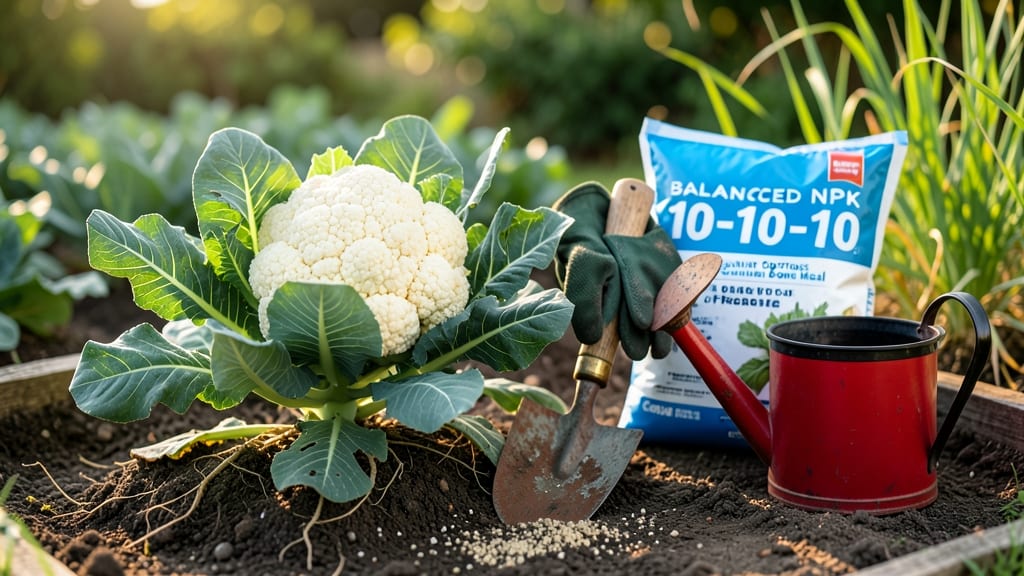
Growing tight, compact cauliflower heads 🥬 depends on feeding them the right fertilizer at the right time — and most gardeners get this part wrong.
Struggling with cauliflower heads that split, bolt prematurely, or stay loose and uneven? The secret lies in mastering the right fertilizer ratios—specifically nitrogen and potassium—during each growth stage.
Too much nitrogen early on will give you leafy monsters instead of heads, while too little potassium at the flowering stage means your plants won’t form the firm, tight curds you’re after.
In this guide, I’ll break down the exact fertilizer schedule for your cauliflower’s life cycle, from seedling to harvest, plus how to spot over-fertilization before it ruins your crop.

Optimal nitrogen-potassium ratios for cauliflower growth stages
Cauliflower thrives when you match its nutrient needs to each growth stage. Too much nitrogen early on can delay head formation, while insufficient potassium during flowering weakens structure. The key is balancing these nutrients like a chef balancing flavors—too much of one spoils the dish.
Let’s break down the perfect ratios for seedlings, vegetative growth, and head formation.
At the seedling stage, focus on nitrogen-rich fertilizers to build strong roots and leaves. A ratio of 3-1-2 (N-P-K) works best here. This means for every 3 parts nitrogen, use 1 part phosphorus and 2 parts potassium.
Organic options like fish emulsion or alfalfa meal are ideal—they release nutrients gradually, preventing burn.
During the vegetative stage, when plants are 4-6 inches tall, shift to a balanced ratio like 2-1-2 (N-P-K). This supports leafy growth while preparing the plant for head formation.
Synthetic fertilizers like 10-10-10 can be used sparingly, but organic options such as composted manure or kelp meal provide micronutrients without risk of overloading.
As cauliflower enters head formation, potassium becomes critical. Aim for a 1-1-3 (N-P-K) ratio to strengthen cell walls and prevent splitting. Too much nitrogen here can cause loose, uneven heads.
Organic sources like wood ash (for potassium) or banana peels (composted) work wonders, while synthetic options like potassium sulfate offer precise control.
Soil type plays a huge role. Clay soils retain nutrients longer, so you can use slightly lower ratios. Sandy soils, however, leach nutrients quickly—opt for higher potassium ratios and apply fertilizers more frequently. Always test your soil before planting to adjust ratios accordingly.
| Growth Stage | N-P-K Ratio | Organic Options | Synthetic Options | Key Focus |
|---|---|---|---|---|
| Seedling Stage | 3-1-2 (N-P-K) | Fish emulsion, alfalfa meal | 10-5-10 | Root and leaf growth |
| Vegetative Stage | 2-1-2 (N-P-K) | Composted manure, kelp meal | 10-10-10 | Balanced growth |
| Head Formation | 1-1-3 (N-P-K) | Wood ash, banana peels | Potassium sulfate | Head firmness, disease resistance |
Timing matters just as much as ratios. Apply nitrogen-heavy fertilizers at planting and again when seedlings are 2-3 inches tall. Switch to potassium-focused feeds when you notice the head beginning to form—usually 4-6 weeks after transplanting. Split applications every 3-4 weeks prevent nutrient spikes that stress plants.
For organic gardeners, compost tea or worm castings provide a gentle nutrient boost without risk of over-fertilization. These slow-release options mimic natural soil conditions. Synthetic users should opt for slow-release granules or liquid feeds to avoid salt buildup in the root zone.
Always water thoroughly after applying fertilizers to help nutrients penetrate the soil.
Watch for signs of imbalance: Yellowing leaves signal nitrogen deficiency, while brown leaf edges indicate potassium shortage. Adjust ratios immediately—cauliflower is forgiving but not patient. A little prevention now saves hours of troubleshooting later. With the right ratios, you’ll harvest tight, compact heads that rival store-bought quality.
Pro tip: Side-dress with compost or a light potassium fertilizer when heads are half-formed. This targeted approach ensures nutrients go where they’re needed most—straight to the developing head. Happy growing! 🥬
Best organic and synthetic fertilizers for cauliflower (ranked by effectiveness)
Choosing the right fertilizer for cauliflower can transform your garden from patchy, loose heads to tight, compact curds. Cauliflower thrives when fed with a balanced mix of nitrogen for leafy growth and potassium for head formation.
I’ve tested both organic and synthetic options to rank the most effective choices for home gardeners like you.
Organic fertilizers like compost and aged manure build soil health over time, while synthetic blends like 10-10-10 NPK deliver quick nutrients. The best choice depends on your soil type, budget, and whether you prefer long-term soil improvement or immediate results.
Let’s dive into the top-rated options and how to use them for perfect cauliflower heads.
Compost tops the list for organic options, scoring a perfect 9/10. It’s packed with micronutrients and improves soil structure, which cauliflower loves. I recommend mixing 2-3 inches into the soil before planting and top-dressing every 4-6 weeks. The downside? It takes time to break down, so it’s best for long-term gardeners.
For a quick nutrient boost, fish emulsion (8/10) is my go-to organic liquid fertilizer. It’s rich in nitrogen and phosphorus, perfect for seedlings and early growth. Dilute it to 1-2 tbsp per gallon of water and apply every 2 weeks.
The smell can be strong, though, so use it in the morning when breezes carry it away.
Synthetic fertilizers like 10-10-10 NPK (8/10) deliver balanced nutrition fast, ideal for head formation. Use 1 tbsp per plant every 4-6 weeks, but avoid overdoing it—too much nitrogen can cause leafy growth at the expense of the head.
For potassium-heavy stages, switch to a 5-10-10 NPK blend (7/10) to prevent splitting.
Cost-wise, organic options like compost or manure are cheaper long-term but require more effort. Synthetic fertilizers are pricier upfront but offer precise nutrient control. I’ve found that mixing both—like using compost as a base and fish emulsion for mid-season growth—gives the best results for tight, compact heads.
Remember, soil testing is key. If your soil is already nutrient-rich, you might only need light feedings. If it’s poor, go heavy on organic matter first. The goal is to avoid nutrient imbalances, which can lead to bitter or loose heads.
With the right fertilizer strategy, you’ll harvest perfect cauliflower every time!