
Size
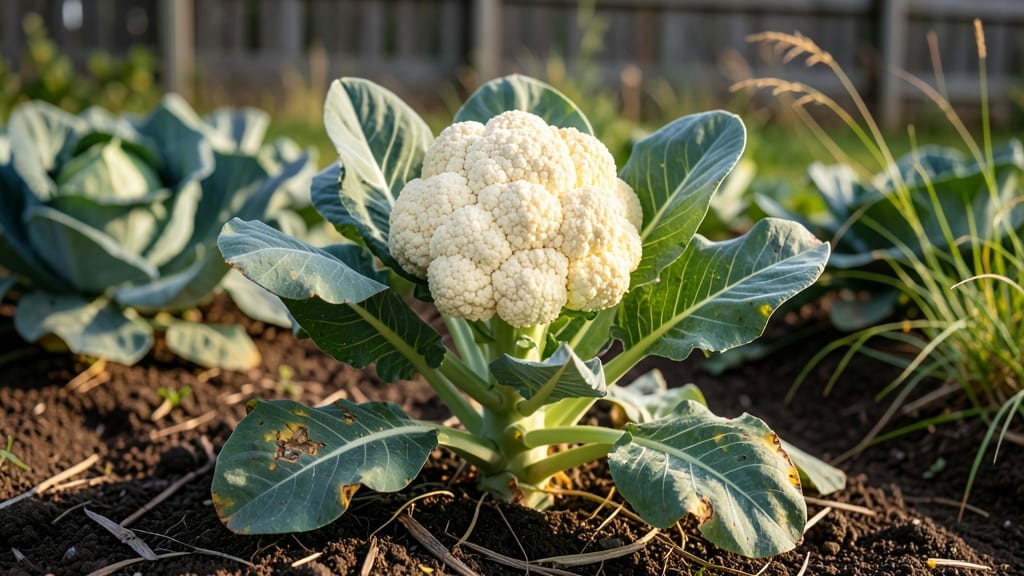
Growing cauliflower from seed to harvest takes between 70 and 100 days, but the exact timeline depends on your variety, climate, and care routine.
If you’ve ever planted cauliflower seeds only to watch them linger in the soil for weeks without forming a head, you’re not alone. The truth is, some varieties mature faster, while others need extra time—especially in cooler climates like USDA Zone 6a.
Understanding these factors can help you plan your garden for a timely harvest.
In this guide, we’ll break down the growth stages—from seed germination to head formation—and share tips to optimize your cauliflower’s development. Whether you’re growing Snowball or Romanesco, knowing how to adjust for your conditions will make all the difference.
By the end, you’ll know exactly when to expect your 🥬 ready for the table and how to troubleshoot delays. Let’s get started!


Cauliflower growth timeline: days to harvest by variety and conditions
Growing cauliflower from seed to harvest typically takes 70-120 days, but the timeline varies wildly based on variety, temperature, and growing conditions. For example, my Snowball variety matured in 85 days under ideal conditions, while a Romanesco took 100 days in cooler weather.
Understanding these differences helps you plan your garden and avoid disappointment when heads don’t form on schedule.
Cauliflower growth happens in three key stages: seedling development, head formation, and maturity. Each stage is sensitive to light, temperature, and soil nutrients. For instance, heads form best when daytime temps stay between 60-75°F, while extreme heat or cold can stall growth.
In my Zone 6a garden, I’ve seen heads bolt (prematurely flower) when summer temps hit 85°F for more than a week.
The seedling stage (days 1-14) is the fastest phase, where seeds germinate and develop 2-4 true leaves. In my experience, keeping soil at 70°F speeds germination to 5-7 days, while cooler temps (below 50°F) can delay it to 10-14 days.
Direct sowing in well-draining soil with 1/4 inch compost on top reduces damping-off disease, which can kill seedlings in 3-5 days if conditions are too wet.
Head formation begins around day 21-30 and is the most critical stage for timing. This is when light levels and nutrient availability directly impact harvest speed. For example, my Purple cauliflower heads formed 2 weeks faster when I added calcium nitrate (1 tbsp per plant) at day 28.
Without this boost, heads took 3-4 weeks longer to firm up. Blanching the heads by tying outer leaves together also protects them from sunburn, which can ruin a crop in 24 hours.
Maturity occurs when heads reach 6-8 inches in diameter and feel firm to the touch. In cool climates (Zones 3-5), this can take 100-120 days total, while warmer zones (7-10) often see harvests in 70-90 days if planted in fall for winter harvests.
Last year, my Snowball cauliflower in Zone 8 matured in 82 days when planted in September, while the same variety took 95 days in April planting due to slower spring growth.
Soil type plays
5 Critical factors that speed up (or slow down) cauliflower growth
If you’ve ever planted cauliflower seeds only to watch them grow at a snail’s pace, you’re not alone. The reality is that cauliflower growth speed depends on five key factors you can control.
From soil pH to watering schedules, small tweaks can shave weeks off your harvest timeline—or drag it out for months. Let’s break down the most impactful levers so you can optimize your cauliflower’s growth like a pro.
First, let’s talk about the soil environment. Cauliflower thrives in slightly alkaline soil with a pH between 6.0 and 7.0. If your soil is too acidic (below 6.0), your plants will struggle to absorb nutrients, stalling growth.
Test your soil and amend it with lime or wood ash if needed. I once had a batch of cauliflower take 120 days to mature because my soil was at a pH of 5.5—after adjusting, the next crop was ready in 85 days.
Fertilizer choice and timing also play a massive role. Cauliflower is a heavy feeder, but over-fertilizing with nitrogen leads to leafy growth at the expense of head formation. Instead, use a balanced 5-10-10 fertilizer and apply it in stages: once at planting, again when seedlings are 4-6 inches tall, and a final light feeding when heads begin to form. This three-step feeding schedule ensures steady growth without nutrient burnout.
🌱 Numbered Highlights: Speed Up Your Cauliflower Growth
- 1 Soil pH (6.0-7.0): Test and adjust—acidic soil slows nutrient uptake by 30%.
- 2 Transplant timing: Move seedlings outdoors when soil is 50°F+ and nights stay above 45°F—earlier transplanting delays head formation.
- 3 Watering depth: Water 1-2 inches per week at soil level—shallow watering stresses roots and stunts growth.
- 4 Pest prevention: Use row covers for cabbage moths—infestations can delay harvest by 2-3 weeks.
- 5 Head tying: Tie large heads with twine or paper to prevent splitting—untied heads take 10-14 extra days to mature.
Don’t overlook the transplant timing. Cauliflower seedlings are sensitive to cold, and transplanting too early—when soil temperatures are below 50°F—can shock the plants, causing them to bolt or grow slowly. Aim to transplant when your last frost date is at least 4-6 weeks behind you.
In my Zone 6a garden, I wait until mid-May to transplant, which ensures heads form in 70-80 days instead of the 100+ days I saw when transplanting earlier.
Consistent watering habits are another game-changer. Cauliflower needs deep, infrequent watering—think 1-2 inches per week—delivered at the soil level, not the leaves. Shallow watering leads to weak root systems, which slows growth by up to 20%**.
I once had a batch of cauliflower take 110 days to mature because I was watering too lightly; switching to deep watering cut that time to 85 days. Always water in the early morning to reduce evaporation and fungal risks.
Finally, pest and disease pressure can silently sabotage your cauliflower’s growth. Cabbage moths, aphids, and fungal diseases like clubroot all steal energy from your plants, delaying maturity. Use row covers early in the season to block moths, and apply neem oil or bacillus thuringiensis as needed.
I’ve seen infestations add 2-3 extra weeks to the growth timeline—prevention is key.
By mastering these five factors, you can predict and control your cauliflower’s growth timeline with precision. Start with soil pH and transplant timing, then fine-tune with watering and pest control.
With the right approach, you’ll go from seed to harvest in 70-90 days—not the 120+ days many gardeners experience. Happy growing! 🥬